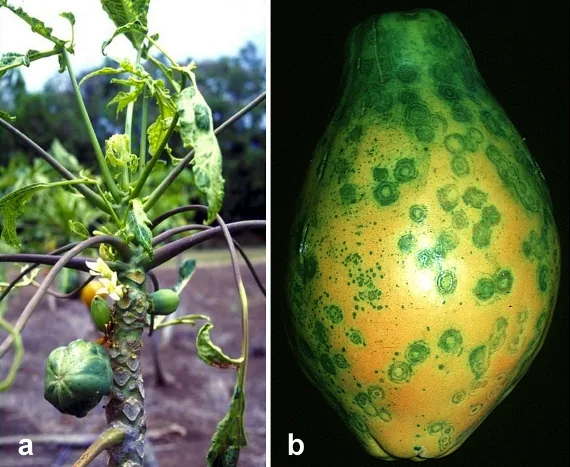
Field Identification
If leaves, stems, or fruit suddenly look spotted, sunken, or rotting, papaya ringspot virus may already be active. This problem often starts small, then spreads across healthy tissue before most growers realize how serious it is. Warmth, moisture, and crowded foliage usually speed it up. Treat early, because waiting even a few days can turn a manageable infection into major crop loss.
Look for a pattern, not one bad leaf: expanding spots, dark or pale halos, fuzzy growth, or tissue that collapses when touched. Check both leaf surfaces, stem bases, and fruit scars where symptoms first appear. New lesions after rain, overhead watering, or heavy dew are a strong clue. When separate spots begin merging into larger dead patches, the disease is advancing quickly.
Not sure what you have? Use the symptom diagnosis tool →
How to Deal With It
Organic Control Methods
There is no biological control for papaya ringspot virus once a tree is infected. All biological effort must focus on suppressing the aphid vectors that transmit it. Parasitic wasps, lady beetles, lacewings, and syrphid fly larvae that reduce aphid populations lower the number of probing events that transmit the virus. The key is that aphids transmit PRSV in 30 seconds or less of probing -- even insecticides cannot kill aphids fast enough to prevent transmission. Diverse flowering plants near papayas support beneficial insects that reduce aphid populations to low levels.
Papaya ringspot virus causes distinctive mosaic, mottling, and distortion of leaves and characteristic ringspot patterns on fruit -- once you see symptoms the tree is infected and will not recover. PRSV is transmitted by over 20 aphid species in a non-persistent manner -- aphids pick up and transmit the virus in seconds of feeding, making insecticide-based aphid control useless for preventing transmission. Plant upwind of any known infected trees or cucurbit plantings. Remove infected trees immediately -- they are permanent virus reservoirs.
Rogue infected trees immediately -- every infected tree is a source of virus that aphids carry to healthy trees. Do not delay removal hoping the tree recovers. In Florida, plant papayas as far as possible from cucurbit crops which also host PRSV. Use physical barriers of tall dense non-host plants between papaya plantings and neighboring properties. Time plantings to avoid peak aphid flight periods in your area. Cross-protection using mild PRSV strains is used commercially in some regions.
Fine insect netting over young trees provides temporary protection from aphid vectors during establishment -- remove once trees are vigorous as netting restricts growth and airflow. Reflective silver mulch under trees disorients alate (winged) aphids landing from above and reduces initial inoculation rates by up to 50%. Row covers on young transplants during establishment give the tree time to establish before exposure.
Mineral oil sprays (1-2% solution) applied to foliage create a coating that physically interferes with aphid stylet probing and reduces PRSV transmission rates -- one of the few sprays with documented virus prevention efficacy. Apply every 5-7 days during high aphid pressure. Kaolin clay on foliage deters aphid landing and probing. Insecticidal soap and neem oil reduce aphid populations but cannot prevent virus transmission since aphids transmit it before they are killed. Focus spray effort on reducing aphid populations to low levels rather than elimination.
Let Nature Handle It
Natural Enemies
- Parasitic Wasps (Aphidiinae)
- Ladybugs
- Lacewings
- Hoverfly Larvae
Threat Map