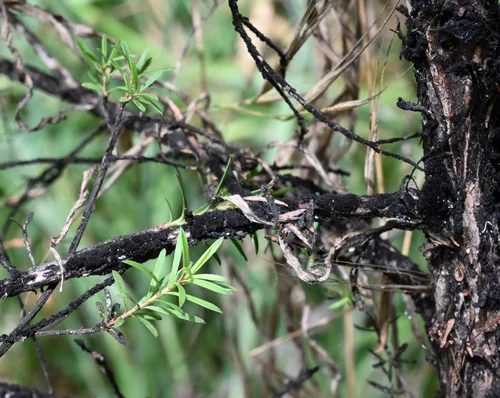
Field Identification
If leaves, stems, or fruit suddenly look spotted, sunken, or rotting, sooty mold may already be active. This problem often starts small, then spreads across healthy tissue before most growers realize how serious it is. Warmth, moisture, and crowded foliage usually speed it up. Treat early, because waiting even a few days can turn a manageable infection into major crop loss.
Look for a pattern, not one bad leaf: expanding spots, dark or pale halos, fuzzy growth, or tissue that collapses when touched. Check both leaf surfaces, stem bases, and fruit scars where symptoms first appear. New lesions after rain, overhead watering, or heavy dew are a strong clue. When separate spots begin merging into larger dead patches, the disease is advancing quickly.
Not sure what you have? Use the symptom diagnosis tool →
How to Deal With It
Organic Control Methods
Sooty mold does not infect plants directly -- it grows on honeydew secreted by aphids, scales, whiteflies, and mealybugs. Eliminating the honeydew-producing insects eliminates the sooty mold. Parasitoid wasps, lady beetles, lacewings, and syrphid fly larvae that collapse aphid and scale populations are the real solution. Ants farm these insects and protect them from natural enemies in exchange for honeydew -- managing ant access with sticky trunk barriers is the most impactful single action to allow biological control to work.
Black sooty coating on leaves, stems, and fruit that wipes off is sooty mold. It blocks sunlight and reduces photosynthesis in severe cases but the real problem is the insects producing the honeydew underneath. Find the source -- check leaves above the sooty coating for aphid colonies, check bark and stem crevices for scale insects, check leaf undersides for whitefly nymphs. Treating sooty mold without treating the insect source is pointless.
Install sticky trunk barriers to exclude ants from tree canopies -- ants actively protect aphids, scales, and mealybugs from all natural enemies. Without ant protection these insects are quickly controlled by natural enemies and honeydew production stops. Prune dense interior branches to improve spray coverage when treating the source insects. Reduce nitrogen fertilization that produces the soft lush growth that honeydew-producing insects prefer.
Soft brush and water washes sooty mold off ornamentals once the insect source is under control -- the mold does not re-establish without fresh honeydew. Pressure washing removes stubborn deposits from sturdy foliage and bark. For fruit trees, washing fruit before harvest with mild soap solution removes sooty mold deposits.
Treat the insect source, not the sooty mold. Horticultural oil or insecticidal soap targeted at the aphid, scale, whitefly, or mealybug colonies producing honeydew eliminates the food source and the mold dies within weeks. A light solution of potassium bicarbonate or castile soap can wash existing mold from small plants. Once the insect source is eliminated sooty mold weathers away without treatment.
Let Nature Handle It
Natural Enemies
- Parasitic Wasps
- Lady Beetles
- Lacewings