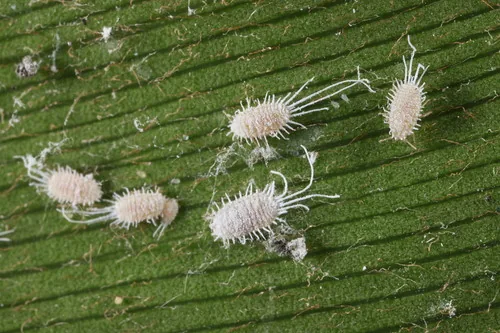
Field Identification
If new growth is curling, yellowing, sticky, or chewed, longtailed mealybug may already be on the plant. This pest often builds quietly, then damage appears all at once. Feeding stress weakens growth, reduces yield, and opens the door to secondary disease. Early cleanup is much easier than fighting a full population surge later.
Inspect the newest growth first: leaf undersides, flower buds, stem joints, and tender tips where pests gather. Look for body shape, color, eggs, cast skins, honeydew, webbing, or fresh puncture marks. A hand lens and a white paper tap test help reveal small life stages. Matching visible pests with fresh plant damage confirms active infestation.
Not sure what you have? Use the symptom diagnosis tool →
How to Deal With It
Organic Control Methods
Anagyrus and Acerophagus wasps parasitize longtailed mealybugs when ant partners do not defend colonies -- break ant trails first. Lady beetles and lacewings eat exposed crawlers. If you see mummies, pause oil sprays until wasps emerge. Purchased parasitoids help in greenhouses more than windy outdoor fields.
Quarantine every new ornamental or fruit plant; mealybugs ride nursery stock like hidden luggage. Control ants with baits or sticky barriers where labels allow so predators reach mealybugs. Scout shoot tips monthly after new installs; early colonies are cheaper than waxy forests.
Open canopy for air movement and light penetration -- dense mealybug hotels hide inside. Avoid over-fertilization that pushes soft shoots every flush; each flush is a new nursery. Remove heavily infested branches when pruning season allows.
Wipe stems and fruit with soapy cloth on small holdings -- physical removal beats one mist on wax. Pressure-wash nursery stock before planting out. Combine wiping with ant control; otherwise mealybugs return overnight.
Insecticidal soap, neem, and horticultural oil work when timed to crawler emergence -- repeat twice weekly until new growth stays clean. Oils need thorough coverage on undersides and leaf sheaths. Test for phytotoxicity on tender cultivars. Rotate modes in greenhouses.
Let Nature Handle It
Natural Enemies
- Lady Beetles
- Parasitic Wasps
- Lacewings