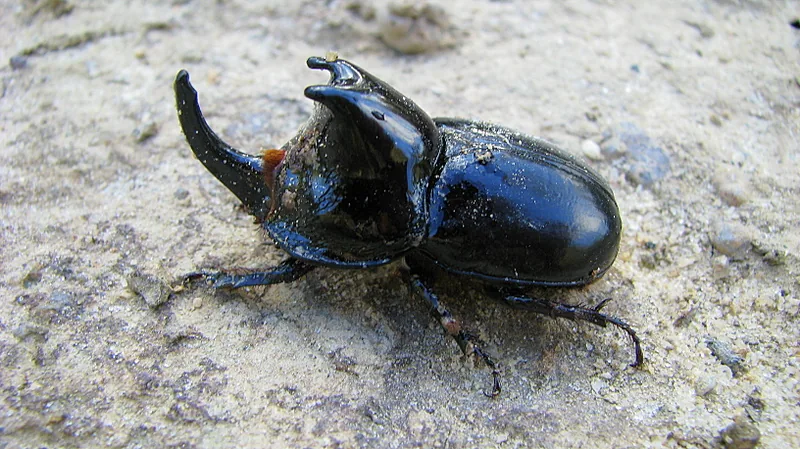
Field Identification
If new growth is curling, yellowing, sticky, or chewed, rhinoceros beetle may already be on the plant. This pest often builds quietly, then damage appears all at once. Feeding stress weakens growth, reduces yield, and opens the door to secondary disease. Early cleanup is much easier than fighting a full population surge later.
Inspect the newest growth first: leaf undersides, flower buds, stem joints, and tender tips where pests gather. Look for body shape, color, eggs, cast skins, honeydew, webbing, or fresh puncture marks. A hand lens and a white paper tap test help reveal small life stages. Matching visible pests with fresh plant damage confirms active infestation.
Not sure what you have? Use the symptom diagnosis tool →
How to Deal With It
Organic Control Methods
Oryctes nudivirus is a beetle-specific pathogen used in classical programs where regulators approve releases -- it is not a homebrew tea. Metarhizium and Beauveria fungi infect adults and grubs when spores stay moist on their bodies long enough to germinate. Scoliid wasps parasitize white grubs in soil; birds pick off adults at lights. Pigs and poultry shred breeding piles in smallholder systems; mongooses and monitors are wild predators, not pets you import. Any biocontrol fails if fresh breeding sites appear weekly.
Adults lay eggs in piles of decaying palm trunks, sawdust, and composted fronds -- zero idle palm logs is the rule, not a suggestion. After storms, chip debris before grubs finish a generation inside soggy stumps. Coordinate neighborhood cleanup; your neighbor's unmoved pile is your immigration office. Screen nursery stock and reject palms with crown holes or wet frass. In regions with established populations, pheromone monitoring tells you when flights spike so you focus sanitation that week.
Chip palm waste hot and turn piles so they finish instead of simmering halfway -- lukewarm piles are beetle nurseries. Kill standing stumps larvae use as condos; grind below soil line where practical. Avoid stacking landscape timbers near crowns where adults hide by day. Turn compost with poultry if local rules allow; birds find grubs fast. Do not rely on bright yard lights for control -- mass outdoor lighting draws adults from kilometers away to mate near your palms.
Pheromone-baited bucket traps catch males and reduce mating pressure when many traps cover a community -- one trap beside a porch mostly rearranges beetles. Hand-remove adults from short palm crowns at night with gloves and a headlamp; drop beetles into soapy water. For accessible breeding piles, sift turning compost and destroy large white grubs you expose. Combine traps with debris removal; traps alone are a finger in the dam.
Metarhizium and Beauveria products labeled for scarabs or palm pests target adults and larvae when you apply to moist breeding media or directly to beetles -- spores die dry. Repeat after rain if labels allow. Neem on trap surfaces is a weak backup that may reduce feeding on bait; it is not crown therapy. Follow label safety for pollinators if you spray near flowering canopy. Organic sprays cannot replace removing half-composted palm trunks.
Let Nature Handle It
Natural Enemies
- Scoliid Wasps
- Birds
Threat Map