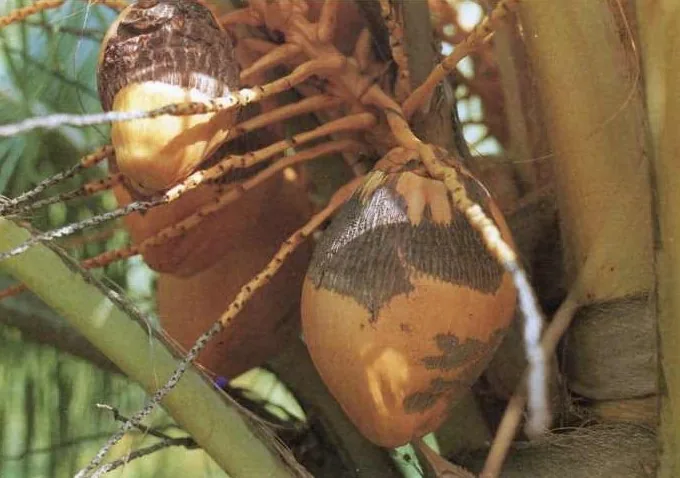
Field Identification
If leaves look dusty, speckled, bronzed, or curled without obvious chewing, coconut mite is a likely suspect. Mites are tiny but can multiply fast, especially during heat and dry air. Plants lose vigor as feeding drains cell contents from leaves and tender growth. Early action matters, because heavy infestations can spread through a bed in days.
Use a hand lens and check leaf undersides first, especially near veins and new growth. Look for pinprick stippling, fine webbing in some species, and tiny moving dots that range from pale to red or brown. Tap a leaf over white paper; moving specks suggest active mites. Stippled leaves plus mites or eggs clustered under foliage confirms the diagnosis.
Not sure what you have? Use the symptom diagnosis tool →
How to Deal With It
Organic Control Methods
Amblyseius largoensis and related predatory mites are released in commercial coconuts in some countries -- they hunt russet mites in bracts and fruit if humidity stays high enough and broad sprays do not kill them weekly. Minute thrips and predatory insects can contribute on diversified farms. Conserve locals by skipping calendar sulfur or soap every Monday; time treatments to counts, not habit. If you see mite predators on the same leaf as damage, pause and reassess before the next tank.
Eriophyid mites crawl on wind and clothing -- scout new plantings monthly and look for bronze russeting on young buttons and fruit stems before the whole head turns copper. Flag the first row that shows color change; that is your early warning, not the last tree in the field. Quarantine equipment between blocks and wash down harvest ladders before moving from infested to clean blocks. In backyard trees, inspect the spear and youngest bunches after windy weeks when mites ride farther.
Dusty roads and bare soil kick mites up into crowns -- maintain ground cover or light water on roads during dry seasons where water policy allows. Remove heavily infested bunches when practical so populations do not spill into neighbors. Balance potassium and magnesium nutrition on sandy soils; starving palms show stress faster than mites show up. Avoid nitrogen-heavy fertilizer that pushes endless soft tissue without building strength. In home yards, keep lawn mowers from blasting dust into the crown every Saturday.
High-pressure rinse of reachable young bunches knocks mites off and cleans bracts -- silly on sixty-foot palms, realistic on patio coconuts. Rotate the wand so water reaches the underside of spathes. Combine rinsing with predatory releases when labels allow. For tall production, aerial lifts and focused nozzles are labor costs; smallholders often combine water with soap or sulfur only on the lower canopy they can reach well.
Sulfur and horticultural oils directed into the spear, bract, and button zone suppress mites when coverage is thorough -- spray in cool mornings to avoid leaf burn on hot days. Soaps work on tender tissue if you add a spreader and avoid repeat applications until dry weather clears. Repeat on a schedule mites force, not a calendar you like. Rotate sulfur with oil programs so you do not select resistant mites or burn fruit skins. Always follow local rules for aerial spraying near homes and water.
Let Nature Handle It
Natural Enemies
- Amblyseius largoensis
- Predatory Thrips
Threat Map