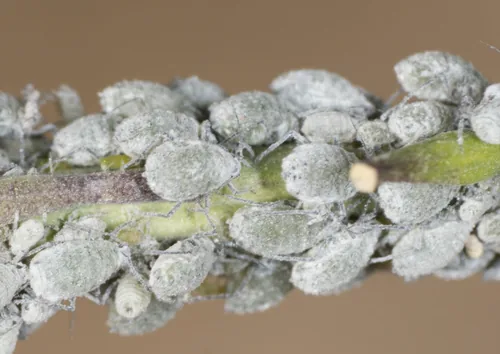
Field Identification
If new growth is curling, yellowing, sticky, or chewed, cabbage aphid may already be on the plant. This pest often builds quietly, then damage appears all at once. Feeding stress weakens growth, reduces yield, and opens the door to secondary disease. Early cleanup is much easier than fighting a full population surge later.
Inspect the newest growth first: leaf undersides, flower buds, stem joints, and tender tips where pests gather. Look for body shape, color, eggs, cast skins, honeydew, webbing, or fresh puncture marks. A hand lens and a white paper tap test help reveal small life stages. Matching visible pests with fresh plant damage confirms active infestation.
Not sure what you have? Use the symptom diagnosis tool →
How to Deal With It
Organic Control Methods
Diaeretiella rapae wasps lay eggs inside aphids; bronze mummies signal success. Syrphid larvae and lady beetles eat exposed colonies on outer leaves. Lacewings work in tunnels when releases match temperature. Skip soap sprays the day you see parasitoid eggs on leaves -- you will kill tomorrow's free workers. Diverse flowering rows at field edges feed adult wasps when brassicas are still small transplants.
Cabbage aphids clone fast on soft growing points -- scout hearts weekly, especially downwind of old brassica debris. Flag greenhouses that ran hot last cycle for earlier releases or tighter screening. Rotate brassica blocks with non-host crops so winged migrants meet fewer hosts in a straight line. Remove volunteer mustards that bridge seasons across fence lines.
Floating row covers on transplants block early colonists until heat or size forces removal. Strip old brassica residue after harvest; do not leave stumps with live aphids into frost. Avoid excess nitrogen that pushes endless waxy flushes; each flush is a new colony. In seed crops, isolate bolting blocks from heavy aphid fields upwind.
Blast leaf axils and heart leaves with a hard water jet every few days in market gardens -- cabbage aphids grip tightly, so pressure matters. For heading cabbage, peel outer wrapper leaves and dunk in cold salt or soap water as a packing-line rinse, not a field fantasy. Vacuum outer leaves on small scales when dry; wet leaves clog vacuums.
Insecticidal soap or horticultural oil penetrates the waxy coat after a firm water pre-rinse opens the colony -- spray to drip on hearts and undersides. Neem reduces feeding on open- leaf types; still cover both surfaces. Repeat on short intervals while new colonies appear. Avoid spraying open brassica flowers when bees work; use directed nozzles on inner leaves or spray at night. Reapply after overhead irrigation washes product away.
Let Nature Handle It
Natural Enemies
- Diaeretiella rapae
- Lady Beetles (Coccinellidae)
- Syrphid Fly Larvae (Syrphidae)
- Lacewing larvae (Chrysopidae)
Threat Map