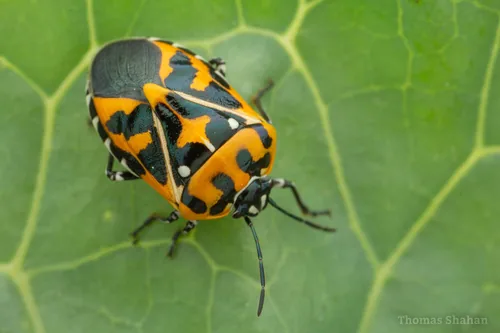
Field Identification
If new growth is curling, yellowing, sticky, or chewed, harlequin bug may already be on the plant. This pest often builds quietly, then damage appears all at once. Feeding stress weakens growth, reduces yield, and opens the door to secondary disease. Early cleanup is much easier than fighting a full population surge later.
Inspect the newest growth first: leaf undersides, flower buds, stem joints, and tender tips where pests gather. Look for body shape, color, eggs, cast skins, honeydew, webbing, or fresh puncture marks. A hand lens and a white paper tap test help reveal small life stages. Matching visible pests with fresh plant damage confirms active infestation.
Not sure what you have? Use the symptom diagnosis tool →
How to Deal With It
Organic Control Methods
Trissolcus and Telenomus wasps parasitize harlequin bug eggs; you see their work as dark eggs that never hatch. Spiders and birds pick off adults moving between plants. Preserve these helpers by avoiding pyrethrin every time you see a pretty beetle -- harlequins return faster than parasitoids build. Leave modest flower strips so adult wasps have nectar when brassicas are still small.
Adults overwinter in crop debris and weedy edges -- clean brassica beds in fall and compost hot or bury deep. Use row cover on spring transplants until covers interfere with growth; bury edges so adults cannot crawl under. Scout cotyledons for the first orange-and-black clusters; early nymphs are easier to knock down than flying adults.
Plant mustard or rape as a trap crop along the upwind edge and flame or remove it when bugs pile on -- late removal turns the trap into a nursery. Rotate brassicas with non- hosts so overwintering adults meet bare soil. Remove wild mustard reservoirs along fence lines when possible. Avoid ultra-lush nitrogen; soft tissue shows damage faster.
Hand-pick adults and nymphs into soapy water in early morning when they move slowly -- a bucket beats chasing them at noon. Knock branches over a light sheet and dump collections daily during outbreaks. For small beds, vacuum adults with a shop vac on cool mornings.
Insecticidal soap and neem work on soft nymphs with full coverage -- adults are tougher. Repeat every three to four days while generations overlap. Spray leaf undersides where nymphs cluster. Avoid open flowers when bees forage; shift to evening. Kaolin on leaves deters feeding if film stays even after wind.
Let Nature Handle It
Natural Enemies
- Egg Parasitoid Wasps
- Spiders
- Birds
Threat Map