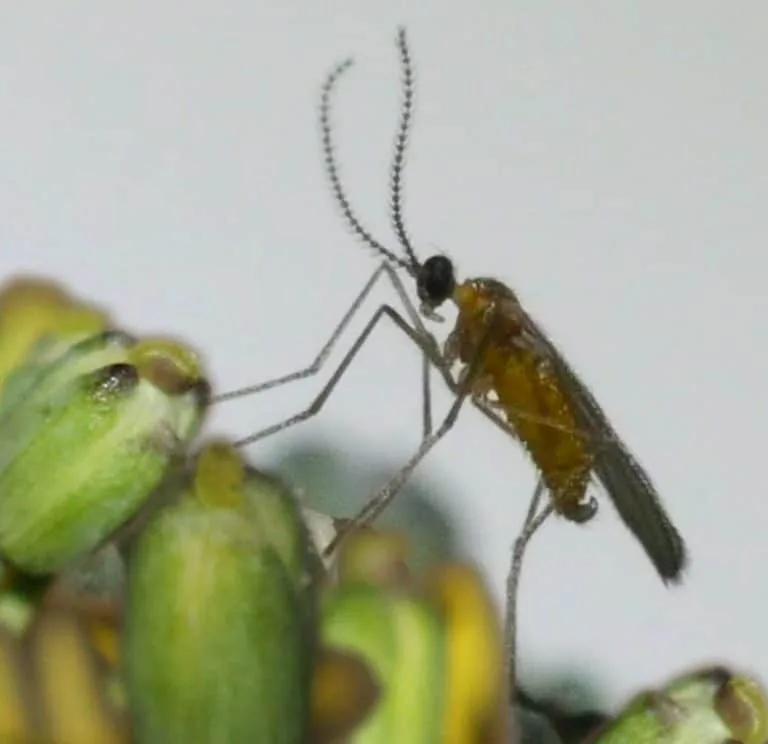
Field Identification
If new growth is curling, yellowing, sticky, or chewed, swede midge may already be on the plant. This pest often builds quietly, then damage appears all at once. Feeding stress weakens growth, reduces yield, and opens the door to secondary disease. Early cleanup is much easier than fighting a full population surge later.
Inspect the newest growth first: leaf undersides, flower buds, stem joints, and tender tips where pests gather. Look for body shape, color, eggs, cast skins, honeydew, webbing, or fresh puncture marks. A hand lens and a white paper tap test help reveal small life stages. Matching visible pests with fresh plant damage confirms active infestation.
Not sure what you have? Use the symptom diagnosis tool →
How to Deal With It
Organic Control Methods
Tiny parasitic wasps attack swede midge larvae inside distorted growing points -- they show up most in diversified farms with hedgerows, not as mail-order fixes for a single hoop house. Ground beetles and rove beetles eat pupae in soil when pupation happens near the surface. Minute pirate bugs eat exposed eggs before larvae tunnel. Broad insecticide sprays during early flushes kill these helpers while midges return on the wind.
Adults are weak fliers that emerge from soil in overlapping generations -- scout the heart of young plants for brown scarring and blind heads before heads form. Rotate brassica blocks across the garden; avoid planting fall brassicas downwind of summer brassicas with no break. Destroy crop residue promptly so pupae have fewer overwintering pockets. Fine mesh netting over hoops stops adults if every seam seals.
Avoid continuous brassica plantings in the same bed year-round; midges bridge generations on small leaves. Interplanting mustard as a trap crop only works if you kill the trap on schedule; otherwise it becomes a nursery. Keep fertility even; stunted plants show damage sooner because the growing point matters more. In wet seasons, improve drainage so plants do not also rot while midges twist stems.
Row covers on young transplants block adults during first flights -- remove at heading if labels and pollination allow, or hand-pollinate seed crops. Remove and bag the earliest distorted growing points on a few plants to lower local reproduction when numbers are low. Solarizing soil helps only in hot climates with thin pest banks; pair with rotation.
Insecticidal soap and neem have limited reach inside distorted tissue -- apply at first adult flight when eggs sit on open leaves, not after heads are blind. Spinosad on labeled crops can help when coverage hits exposed larvae. Repeat after rain; short residual means timing beats brand. Combine sprays with netting; sprays alone in windy fields waste money.
Let Nature Handle It
Natural Enemies
- Parasitic Wasps
- Predatory Insects
Threat Map