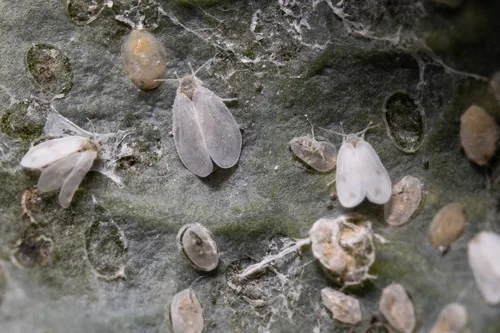
Field Identification
If leaves show trails, fruit turns soft, or roots collapse from inside, whitefly may already be feeding. The larval stage does most of the damage, often hidden where you cannot see it at first glance. By the time yellowing or rot appears, feeding may be well underway. Move quickly when symptoms begin to prevent another wave of eggs and larvae.
Watch for tiny eggs near plant tissue, pale legless larvae inside mines or fruit, and sudden soft spots or tunnels. Adults are usually small flies that hover or dart when disturbed. Check around wounds, blossoms, and moist plant debris where egg-laying is common. Cut open suspect tissue: live maggots or fresh tunnels are the clearest field confirmation.
Not sure what you have? Use the symptom diagnosis tool →
How to Deal With It
Organic Control Methods
Encarsia and Eretmocerus parasitoids turn whitefly nymphs into black or yellow mummies -- buy releases for greenhouse crops or conserve wild populations by skipping calendar sprays. Delphastus catalinae lady beetles eat eggs and nymphs fast. Lacewings help when humidity stays high. If you fog pyrethrin weekly, you farm whiteflies alone; parasitoids die faster than pests rebound.
Inspect every new plant; quarantine greenhouse additions for two weeks and tap leaves over white paper. Avoid excess nitrogen that pushes soft, sweet growth whiteflies love. Screen vents and doors before adults ride the wind into clean houses. Blue and yellow sticky cards at canopy height show trends early.
Strip heavily infested leaves and bag them; nymphs stay on discarded leaves for days. Intersperse less-preferred species only as diversity for predators, not magic repellence. Clean crop residues between successions so adults cannot hide in old debris. Lower greenhouse heat slightly if possible; reproduction slows below optimal temps.
Yellow sticky traps catch adults for monitoring and some mass reduction in tight houses. A stiff water rinse on leaf undersides dislodges eggs and crawlers on sturdy plants -- repeat every two to three days. Vacuum adults from glass walls on cool mornings.
Insecticidal soap, neem, and horticultural oil work when they coat undersides where nymphs sit -- avoid hot sun on hairy leaves that hold oil and burn. Repeat on short intervals while generations overlap. Rotate soap, neem, and oil in greenhouses to slow resistance. Spray at dusk to spare parasitoids hunting the same leaves.
Let Nature Handle It
Natural Enemies
- Parasitic Wasps
- Ladybugs
- Lacewings
- Minute Pirate Bugs