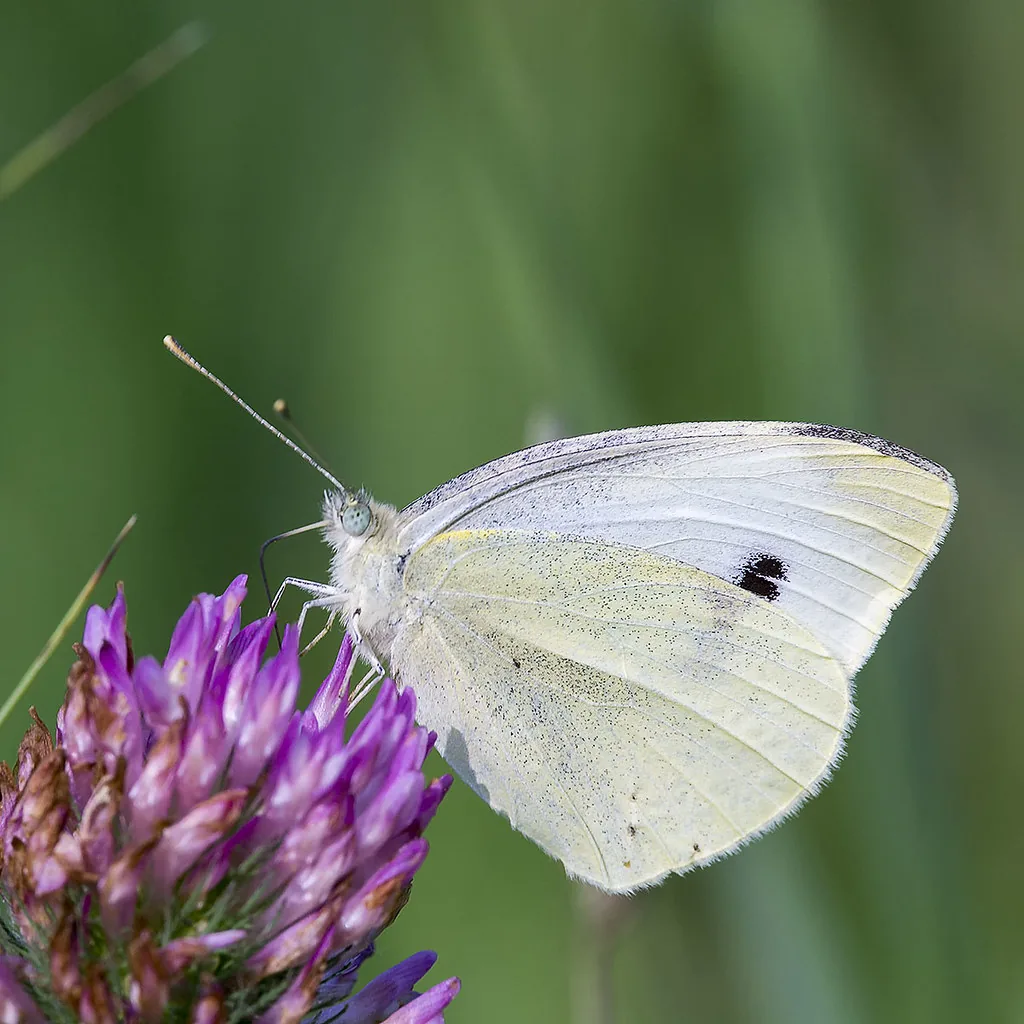
Field Identification
If new growth is curling, yellowing, sticky, or chewed, cabbage white butterflies may already be on the plant. This pest often builds quietly, then damage appears all at once. Feeding stress weakens growth, reduces yield, and opens the door to secondary disease. Early cleanup is much easier than fighting a full population surge later.
Inspect the newest growth first: leaf undersides, flower buds, stem joints, and tender tips where pests gather. Look for body shape, color, eggs, cast skins, honeydew, webbing, or fresh puncture marks. A hand lens and a white paper tap test help reveal small life stages. Matching visible pests with fresh plant damage confirms active infestation.
Not sure what you have? Use the symptom diagnosis tool →
How to Deal With It
Organic Control Methods
Parasitic wasps such as Cotesia species turn Pieris larvae into mummies; birds pick off large caterpillars on outer leaves. Minute pirate bugs eat eggs when sprays stay selective. If you see cocoons on a caterpillar, leave it -- free biocontrol. Calendar pyrethrin kills parasitoids faster than it kills imported cabbageworms.
Scout brassicas for yellow egg clusters and young green larvae -- check undersides first. Balanced watering and fertility help plants tolerate feeding; they do not hide insects from your eyes. Flag rows that exploded last season; walk those first each spring.
Rotate brassicas with non-host crops; continuous broccoli bridges generations. Reflective mulches disorient some adults in bright sun; bury edges. Interplanting repellent species is weak evidence; rotation and covers win. Remove wild mustard near fields that hosts the same butterflies.
Floating row covers from transplant until cover removal for head space block egg-laying adults when sealed. Hand-pick larvae into soapy water on small beds -- fast when numbers are low, comic when numbers are high.
Bacillus thuringiensis kurstaki kills small caterpillars that ingest treated leaf -- spray before larvae tunnel into heads. Insecticidal soap and neem contact young larvae on leaf surfaces. Spray at dusk to spare bees on open brassica flowers. Reapply after rain; Bt washes off fast.
Let Nature Handle It
Natural Enemies
- Parasitic Wasps
- Birds
- Predatory Insects