About
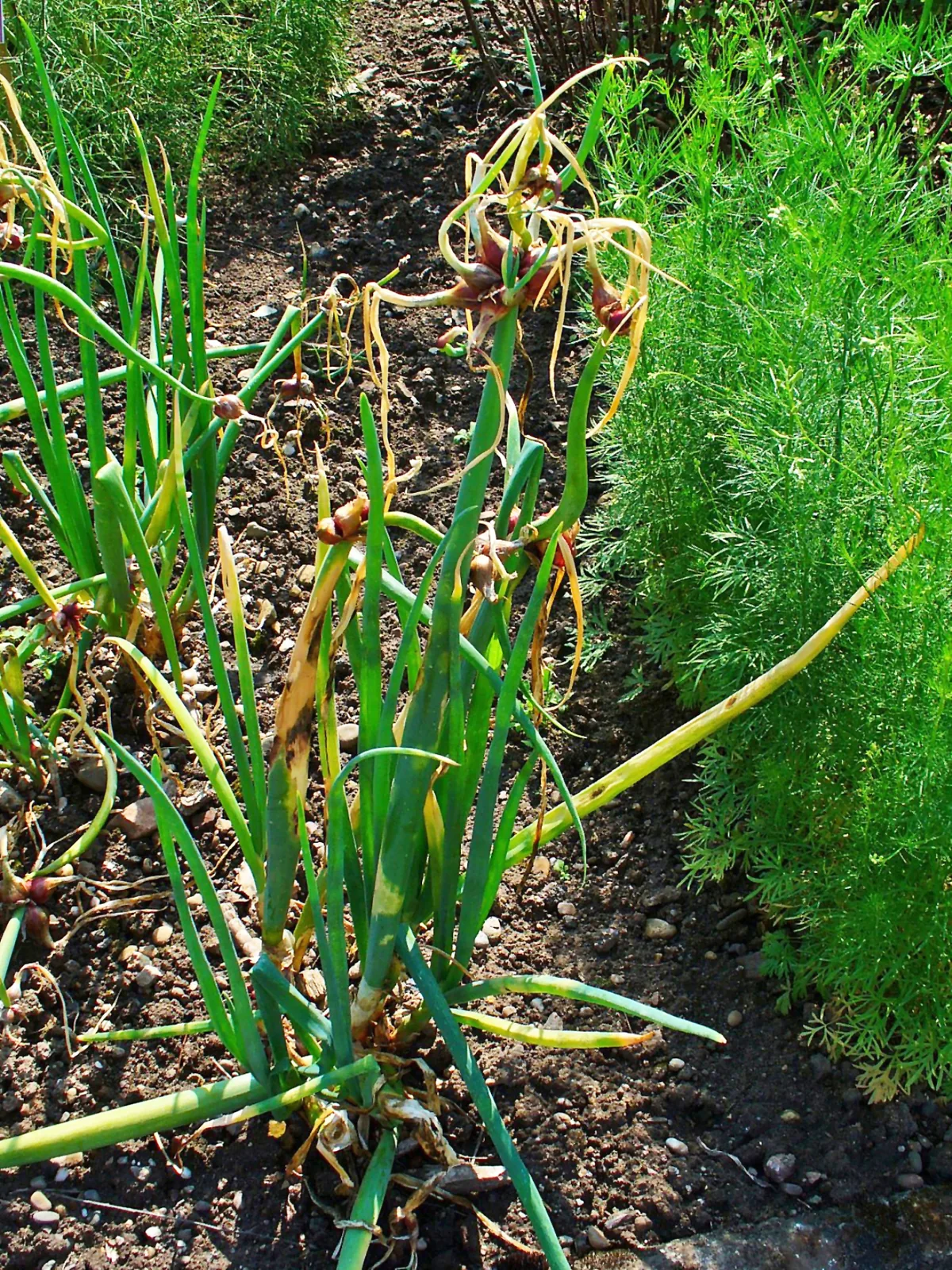
Walking onion (Allium × proliferum) is a perennial bunching onion that forms bulbils on tall stalks; when heavy, the stalks arch, plantlets touch soil, and the patch “walks” outward—hence the drama. Underground bulbs divide like shallots while topsets give you instant clones. In subtropical and tropical Americas it grows through cool season peaks and may slow in deep summer heat; treat it like a hardy perennial allium that still appreciates drainage during wet season. Full sun for best bulb and topset size. Moderate water; excellent drainage—onions sulk in puddles. Mulch lightly to moderate soil temperature but keep necks dry. Plant topsets in moist soil 2–3 cm deep when they separate easily; roots form in weeks during mild weather. Split parent clumps in fall or early spring, replanting offsets immediately. Save the largest underground bulbs for kitchen; replant smaller divisions for propagation stock. Snip green onion tops anytime; harvest underground bulbs when tops begin to yellow and flop. Gather topsets when firm and well-colored before they sprout on the stalk if you want clean planting stock.
Permaculture Functions
- Edible: Allium × proliferum supplies scallion greens, underground shallot bulbs, and aerial top bulbs -- each tier tastes progressively stronger; plant topsets when stalks arch to soil contact.
- Pest Management: Sulfur volatiles mask carrot rust fly cues in mixed rows -- ring vulnerable beds; they do not replace row cover if your fly pressure is biblical.
- Border Plant: Upright clumps stand out like green exclamation points -- predictable height for edging without shading low crops.
- Biomass: Tough leaves compost slower than lettuce -- chop spent blades with comfrey for balanced C:N mulch.
Companion Planting