About
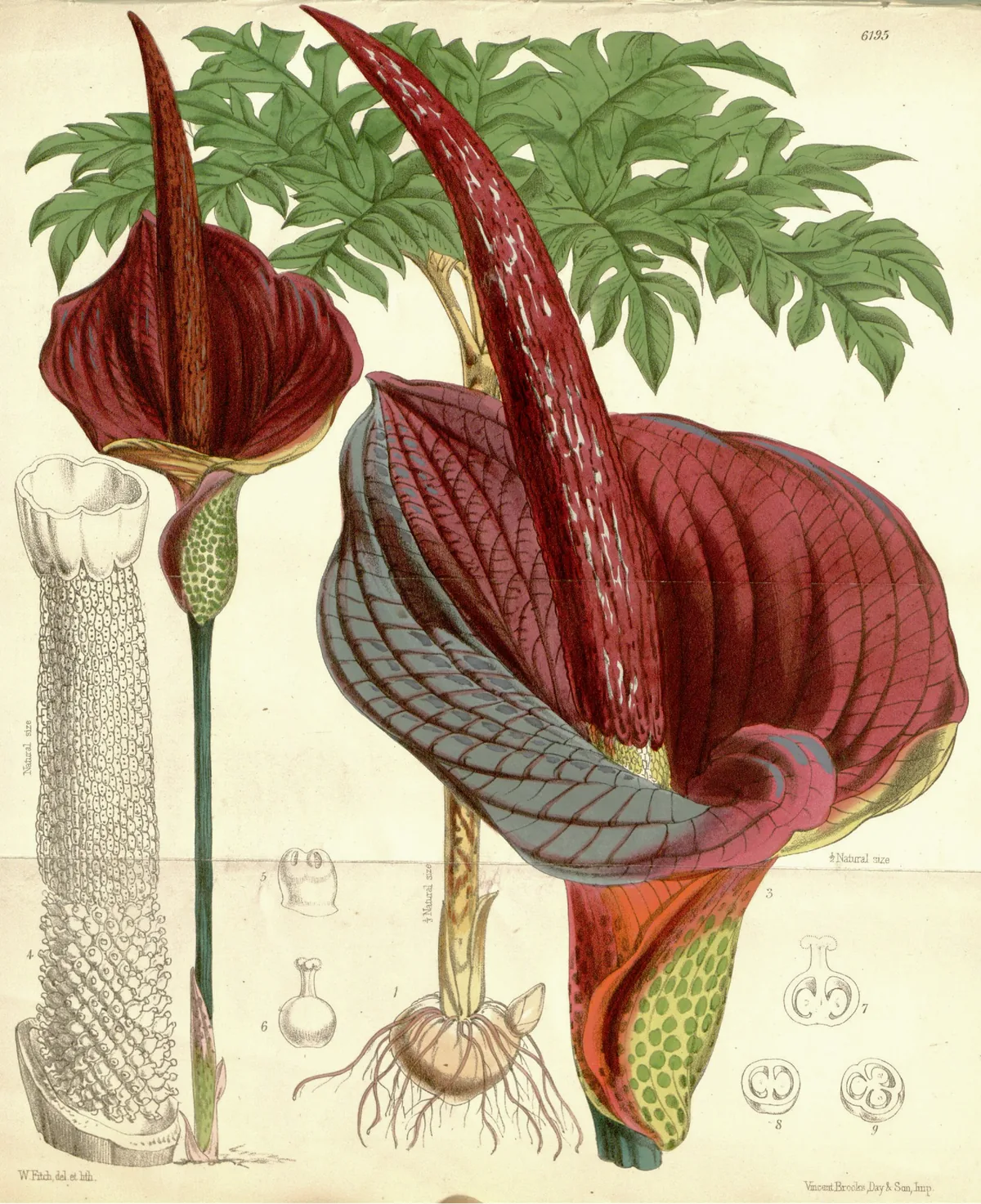
Konjac is the elephant-foot yam famous for glucomannan noodles and jelly that bounce like science. Same genus vibe as suran but different species — konjac corms become shirataki after processing, not mash-and-pray yam fries. Hardy oddity in warm zones; dormant corms survive mild winters with mulch. In subtropical and tropical Americas, site in part shade with excellent drainage and dry winter dormancy; humid wet seasons favor rapid leaf growth if corms stay off saturated pads. Bright shade to filtered sun; hot dry sun scorches petioles. Moist while in leaf; almost dry when dormant to prevent rot. Offset cormlets split at dormancy. Tissue culture and commercial corms for food industry — home growers use offsets. Flower smells like a dare; your nose has been warned. Konjac: dig tubers or roots after tops senesce or frost signals storage shift -- curing a few days at 50-60°F (10-16°C) sweetens some starches. Loosen soil wide first -- snapped necks invite rot in storage. Brush-dry before long storage; plastic totes without airflow grow penicillin cosplay.
Permaculture Functions
- Edible: Amorphophallus konjac corms yield glucomannan flour for shirataki noodles after careful processing -- raw corm calcium oxalate loads make crunchy snacks a bad idea without industrial leaching.
- Ornamental: Each dormant corm pushes one gigantic tripartite leaf and occasionally a carrion-scented inflorescence -- grow as a conversation plant where neighbors forgive brief corpse odors.
- Biomass: Petioles and blades collapse into bulky compost inputs after dormancy -- bury spent spathes quickly so flies do not stage block parties on the patio.