About
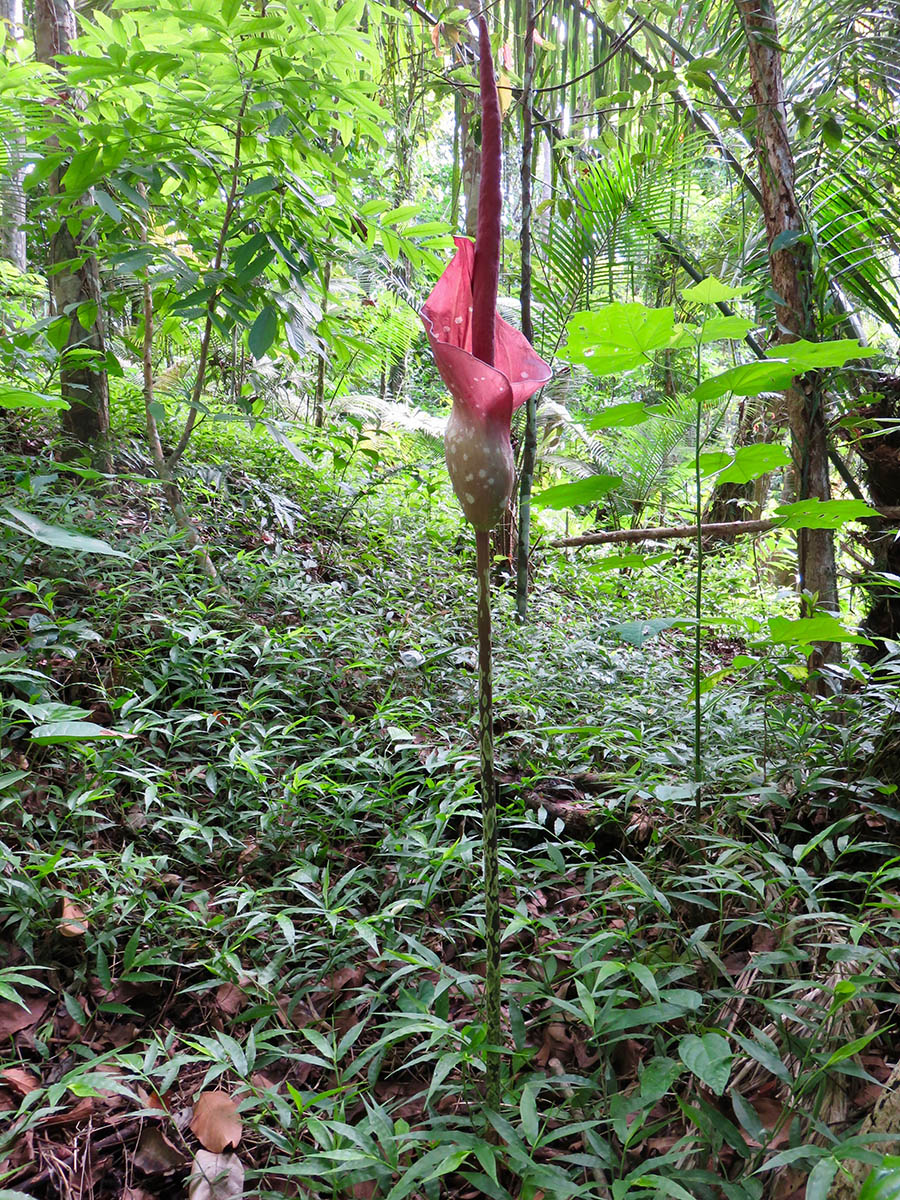
This genus is famous for corpse-flower stunts, but elephant foot yam is also a serious tropical staple corm. A single umbrella leaf on a mottled petiole, then dormancy while the underground corm swells. In subtropical and tropical Americas you are playing annual-ish games unless you protect from hard frost and rot. Propagation is corm division and offsets; seeds are for botanists with patience. 🌞💧 Sun and Water Requirements: - Part shade to dappled sun; harsh sun can scorch juvenile leaves. - Warm-season moisture; dry off corms in dormancy to reduce rot. - Rich, well-drained soil — wet cold is the enemy. ✂️🫘 Methods to Propagate: - Corm division when dormant in warm soil. - Bulbils when present on some species. 🧑🌾👩🌾 When to Harvest: - Dig main corm after tops senesce; peel and cook thoroughly. - Never eat raw aroids — calcium oxalate wants a word.
Permaculture Functions
- Edible: Large corms where cultivars are food-type (always cook).
- Ornamental: Spectacular foliage; flowers are olfactory warfare.
- Mulcher: Huge leaves chop-and-drop into tropical guilds.
Amorphophallus is starchy drama underground:
Practitioner Notes
- Store dormant corms bone-dry above 50°F (10°C) if possible—cold wet storage is rot roulette.
- First leaf each season is a single umbrella—do not panic-split the pot thinking you killed the plant.
- Long cooking breaks down oxalate crystals; never treat raw corms like crunchy snacks.
Companion Planting
- Banana
- Taro
- Ginger
- Cold wet winter beds
Pest Pressure