About
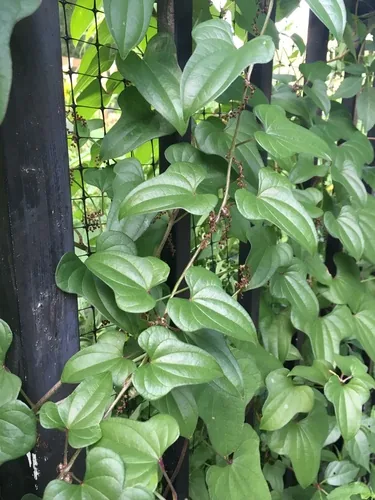
Dioscorea polystachya is the twining yam with tiny edible bulbils (“air potatoes”) and larger underground tubers—nutty when cooked, invasive where laws say so. Florida and several states side-eye it; check before planting. subtropical and tropical Americas: Vigorous in humid summers; dies back after cool snaps in the cooler parts of the Florida peninsula while tubers persist. In frost-free islands and tropical and subtropical zones it never rests—trellis hard or watch it audition as a strangler. Full sun to part shade; fertile soil with deep loosened zones for tuber expansion. Steady moisture while vines run; dry-down cues vary by climate—learn your local calendar. Bulbils, tuber pieces, or seed (less common in gardens)—assume everything wants to spread. Collect aerial bulbils before they ping neighbors' fences. Dig main tubers after vines yellow; cook bulbils like mini yams once ID and legality are squared away.
Permaculture Functions
- Edible: Large underground tubers and fingernail aerial bulbils are starchy after thorough cooking -- raw Dioscorea tissue irritates mucosa and ID mistakes are dangerous.
- Ground Cover: Summer twining stems shade soil and can blanket trellis walls within weeks -- if you guide growth away from young tree trunks.
- Biomass: Frost-killed or cut vines add coarse herbaceous bulk to compost piles -- when you need carbon-rich cover over nitrogen-heavy kitchen scraps.
- Dynamic Accumulator: Years of tuber enlargement pull potassium and other ions from deeper horizons -- returning composted vine litter recycles that catch back to surface beds.
Companion Planting