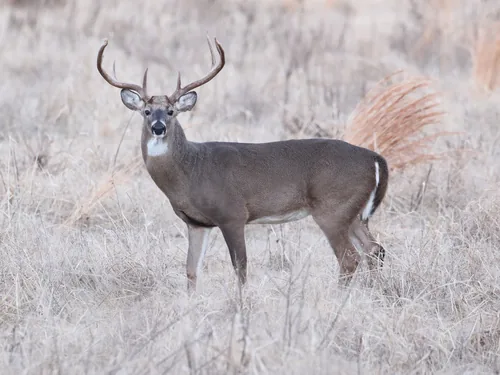
Field Identification
If plants are cleanly stripped of leaves and tender growth overnight with no other signs of pest activity, deer were there. Unlike most pests, deer damage is obvious and large scale — entire branches browsed, bark rubbed off small trees, and young plants eaten to the ground. They are creatures of habit and will return to the same garden every night once they discover a food source. A single deer can destroy months of garden work in one visit. Bucks also rub antlers on young tree trunks in fall, girdling and killing them. In suburban and rural Florida, white-tailed deer are active year-round.
Look for clean diagonal cuts on stems — deer have no upper incisors so they tear rather than cut cleanly, leaving a ragged edge on thicker stems but clean browsing on soft growth. Hoof prints are heart-shaped, 2-3 inches long. Droppings are small dark oval pellets in clusters. Bark damage on tree trunks at 2-4 feet height with vertical scraping marks is antler rubbing. Deer typically browse at the same height — 2 to 6 feet — stripping lower branches uniformly. Check for damage at dawn when deer are most active and tracks are fresh.
Not sure what you have? Use the symptom diagnosis tool →
How to Deal With It
Organic Control Methods
No practical biological control exists for deer. Coyotes, bobcats, and Florida panthers are natural predators but do not effectively protect gardens. Planting deer-resistant species throughout the food forest reduces overall attractiveness — deer have strong plant preferences and will leave highly aromatic plants like lemongrass, rosemary, lavender, and strongly scented herbs largely alone. A diverse food forest with many species is less catastrophically damaged than a monoculture when deer visit — they browse selectively and move on rather than destroying everything. Over time, very dense plantings with thorny understory species like hawthorn and rugosa rose create physical barriers deer navigate around.
Deer are neophobic — they are cautious about new objects and smells in familiar territory. Frequently changing deterrents works better than leaving the same one in place. They are most active at dawn, dusk, and overnight. New plantings and tender growth in spring are highest risk. Deer pressure increases in fall when natural food sources decline and during drought when garden plants are among the few green things available. Know your local deer patterns — the same animals use the same routes nightly. Motion-activated lighting and sprinklers startle deer effectively but they habituate within 1-2 weeks if nothing actually threatens them.
The only reliable long-term solution is physical exclusion — an 8-foot fence or a double fence system. A single 6-foot fence is not reliable as deer can jump it. A double fence of two 4-foot fences 3 feet apart works because deer cannot simultaneously jump height and width. Thorny hedges of hawthorn, rugosa rose, or trifoliate orange planted densely create living fences that improve over time. For individual trees, wire cages or spiral tree guards protect trunks from antler rubbing during fall rut. Protect new transplants individually until established — mature plants recover from deer browse, seedlings often do not.
Physical barriers are the only mechanical control that reliably works. Chicken wire or hardware cloth cages around individual plants and young trees protect them until large enough to tolerate browse. T-posts with deer netting (7-8 feet tall) around garden areas is effective when installed correctly with no gaps. Motion-activated sprinklers (Scarecrow type) provide short-term deterrence but require frequent repositioning to maintain effectiveness as deer habituate. Fishing line strung at 2 and 4 feet height around beds confuses deer — they feel resistance they cannot see and avoid the area. Inexpensive and surprisingly effective.
Deer repellent sprays based on putrescent egg solids (Liquid Fence, Deer Out) are the most consistently effective chemical deterrents — the smell mimics predator activity and triggers avoidance instinct. Apply every 2-3 weeks and after rain, coating new growth thoroughly. Rotate with other repellents every few weeks to prevent habituation. Human hair in mesh bags, Irish Spring soap bars, and predator urine have inconsistent results but cost nothing and are worth trying as part of a rotation. No spray works reliably on its own — combine with physical barriers for high-value plants. Reapplication is non-negotiable — a single application wears off and deer return.
Let Nature Handle It
Natural Enemies
- Coyotes
- Bobcats
- Florida Panthers
- Black Bears
Threat Map