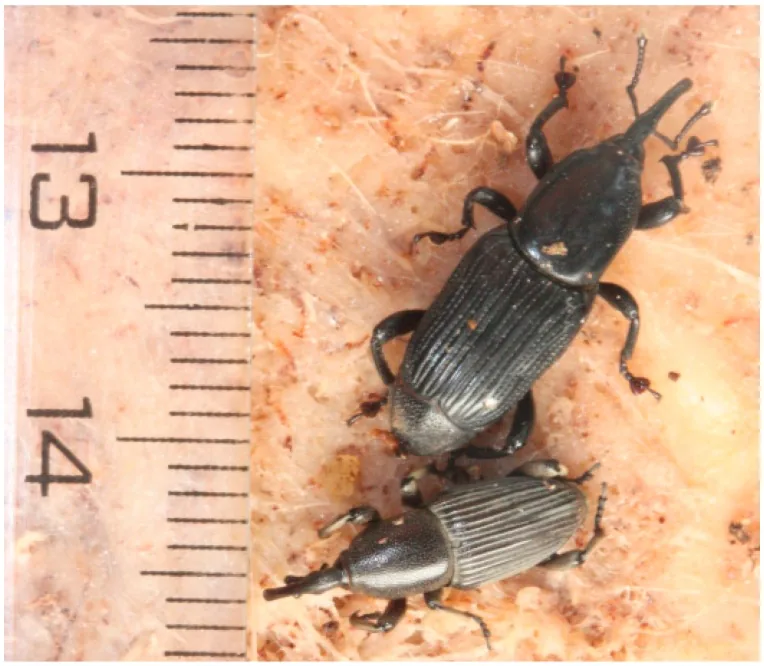
Field Identification
If plants are wilting, notching at the edges, or fruit and roots show hidden feeding damage, banana weevil may be the cause. Adults chew above ground while larvae often feed out of sight inside soil, stems, or fruit. Damage builds quietly, then plants crash fast when roots are heavily hit. Act early so a small weevil problem does not become a season-long infestation.
Look for small beetles with a hard body and a distinct snout, usually active at dawn, dusk, or night. Check for crescent-shaped leaf notches, punctures in fruit, or tiny entry holes near stems. In soil or damaged tissue, larvae are often pale, legless, and curved in a C-shape. Fresh chew marks plus snout beetles or C-shaped grubs confirm active weevil pressure.
Not sure what you have? Use the symptom diagnosis tool →
How to Deal With It
Organic Control Methods
Beauveria bassiana formulations infect banana weevils when spores contact adults in moist traps -- rotate with sanitation so you do not select resistant beetles. Ants and earwigs scavenge eggs in mulch; poultry scratch at mats where local rules allow. Nematodes rarely fix cryptic borers inside corms; focus on trapping adults and cleaning planting stock.
Start from certified tissue-culture plants; field-collected suckers often carry hidden grubs. Isolate new mats one season before blending into clean blocks. Monitor pseudostem traps monthly -- early numbers beat late mat collapse when corms turn to sawdust inside. Map farms with history and inspect those mats first after storms.
At harvest, split pseudostems and remove old corms so larvae cannot finish generations inside stumps. Solarize or hot-water treat sword suckers before replanting when protocols exist. Fix drainage; puddle fields only where standing water otherwise invites rot worse than weevils. Remove debris piles that shelter adults between mats.
Pseudostem traps baited with fermenting fruit or pheromone where available catch adults walking at night -- empty traps weekly. Chop and destroy infested material off-site under biosecurity rules. For small plots, hand-remove adults at night with a headlamp and soapy bucket.
Neem or pyrethrin drenches into traps or cut stumps knock down adults contacting bait -- rotate actives and respect label intervals. Focus spray on breeding sites, not canopy fogging that kills everything except the grubs inside corms. Repeat after rain; many botanicals wash fast.
Let Nature Handle It
Natural Enemies
- Ants
- Earwigs
- Ground Beetles