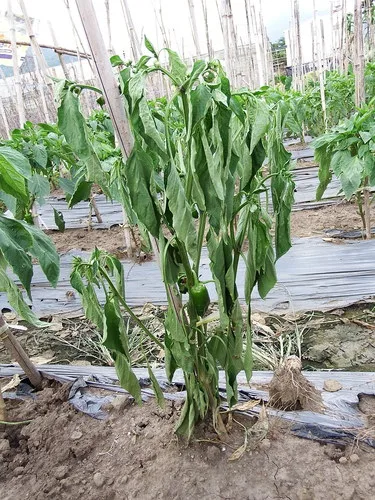
Field Identification
Bacterial wilt clogs xylem so entire branches or plants collapse while foliage may still look oddly green for a day or two. It spreads with soil water, tools, infected transplants, and root contact. Warm, wet soil favors rapid symptom expression in susceptible hosts like tomato, pepper, eggplant, and many ornamentals. There is no cure for an infected plant -- management is exclusion, sanitation, and resistant varieties.
Cut a stem at soil level and suspend the cut end in clear water -- bacterial ooze may stream as milky threads in advanced cases, though this test is not foolproof on every host. Brown vascular discoloration visible when you peel bark helps distinguish wilt from root rot in some crops. Symptoms often start on one side of the plant or one runner before the whole system fails. Fields with history of brown, water-soaked stem bases and rapid collapse after hot weather should be treated as contaminated until tested.
Not sure what you have? Use the symptom diagnosis tool →
How to Deal With It
Organic Control Methods
Suppressive soils with high organic matter and diverse microbial communities sometimes slow bacterial wilt establishment compared with fumigated or sterile media. Some commercial biocontrol strains of Bacillus and Pseudomonas are studied for competitive exclusion, but results vary by strain, crop, and environment. Beneficial mycorrhizae improve root health indirectly but do not replace sanitation. Think of biology as a buffer that works best when rotation, drainage, and clean planting stock are already in place.
Use certified disease-free seed and transplants from reputable sources. Never return wash water from suspected plants onto beds or tools without cleaning. Rotate susceptible solanums away from known hot spots for several seasons where space allows. Choose resistant rootstocks and cultivars when breeders have released material for your crop and pathogen race.
Improve drainage in low spots so roots are not anaerobic during warm rains. Avoid high nitrogen that pushes lush growth when plants are already under disease pressure. Mulch with materials that do not hold excess moisture against crowns if your climate is humid. Grafting susceptible tomatoes onto resistant rootstocks is a documented practice in regions where races are mapped.
Remove and destroy infected plants before oozing contacts neighboring roots -- do not compost symptomatic tissue. Sterilize blades between plants with a labeled tool disinfectant or dilute bleach solution following safety guidance. Dedicated boots or disposable foot covers reduce soil tracking between blocks in high tunnels. Solarizing soil can lower inoculum in small beds when done according to extension timing for your latitude.
Foliar sprays do not cure systemic bacterial wilt inside vascular tissue. Copper products may reduce secondary leaf spots on some hosts but do not resurrect collapsed plants. Focus spending on clean inputs and rotation instead of repeated copper that can accumulate in soil biology. If you experiment with biological drenches, track results carefully because efficacy data for home scale is thinner than for major commercial pathogens.
Let Nature Handle It
Natural Enemies
- Competitive Microbes
- Antagonistic Bacteria
- Beneficial Fungi
Threat Map