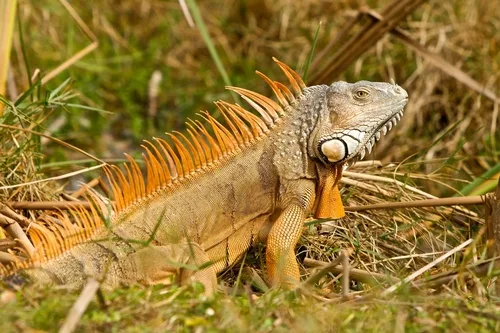
Field Identification
Green iguanas are large herbivorous lizards that clip tender shoots, flowers, and fruit during the day, leaving ragged browsing where insects would make smaller holes. Invasive populations damage food gardens, young orchard trees, and nursery stock in tropical and subtropical lowlands and warm urban heat islands. They also dig burrows that undermine banks, seawalls, and root zones. Management combines exclusion, population reduction where regulations allow, and habitat changes that make your site less attractive than the neighbor's hibiscus hedge.
Adults are unmistakable -- long tail, dewlap, often green to gray-green, excellent climbers and swimmers. Look for cleanly clipped buds on roses and hibiscus, stripped bean leaves, and pellets of droppings on walls or pool decks. Burrow holes are wider than rabbit holes and often under structures. Juveniles are bright green and far more arboreal, which makes them harder to notice until damage appears.
Not sure what you have? Use the symptom diagnosis tool →
How to Deal With It
Organic Control Methods
Hawks, owls, and large snakes occasionally take juveniles, but predation rarely keeps pace with reproductive output in areas without a full native predator suite. Dogs deter feeding in a zone but do not replace fencing. Do not introduce non-native predators -- that trade creates worse ecological debt. Where agencies promote humane removal, coordinate with local rules instead of improvising.
Harvest fruit promptly and pick up windfalls that concentrate visits. Reduce dense stands of preferred soft-leaved ornamentals along property lines if design allows. Ponds and canals act as movement corridors -- expect more pressure on lots adjacent to water. Screen greenhouse vents with sturdy mesh where iguanas enter propagation areas.
Plant tougher-leaved species and strong aromatics on vulnerable perimeters -- iguanas often avoid citrus, rosemary, and other resinous plants compared with hibiscus and tender greens. Sacrifice beds of preferred species can pull feeding away from vegetable rows. Fill known burrows with gravel after confirming no animals are trapped inside, following humane wildlife guidance for your jurisdiction.
Metal tree collars or sheet metal guards block climbing to low branches while young trees harden off. Buried hardware cloth aprons stop digging under fences -- angle outward six inches. Large cage traps with fruit bait work for repeat offenders when legal. Motion-activated sprinklers provide short-term startle value if moved often.
Garlic and hot pepper repellent sprays on foliage reduce feeding until rain washes them off. Neem makes some leaves less palatable. Predator urine products vary in efficacy. Sprays help protect a few prized plants but will not stop a determined adult population -- pair them with fencing and population management where permitted.
Let Nature Handle It
Natural Enemies
- Hawks
- Owls
- Large Snakes
Threat Map