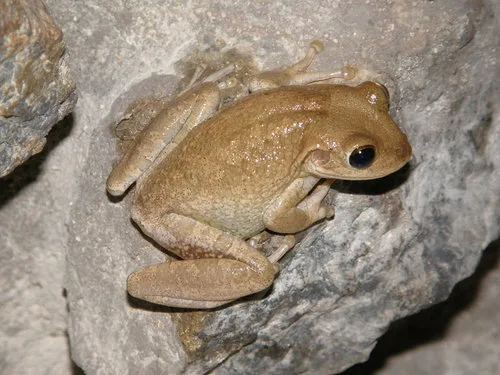
Field Identification
Cuban tree frogs are large nocturnal hylids that climb walls, enter sheds, and colonize downspouts and nursery houses. They eat native tree frogs and small vertebrates, and their skin secretions irritate mucous membranes. In horticulture they are a nuisance around irrigation boxes, shade houses, and porch lights that concentrate insect prey. Where they are invasive, management favors exclusion and humane removal following local wildlife rules.
Adults are variable gray to brown with enlarged toe pads and often red-orange flash color in the groin when stretched. Their skin feels warty compared with many native tree frogs. Egg masses are long strings laid in any standing water, including buckets and plant saucers. Listen for a loud, grating breeding chorus on warm wet nights.
Not sure what you have? Use the symptom diagnosis tool →
How to Deal With It
Organic Control Methods
Native snakes and raptors occasionally prey on small Cuban tree frogs, but predation rarely controls dense invasive populations by itself. Competitor native tree frogs can be displaced, so protecting native habitat is part of long-term biological balance. Do not relocate invasive frogs into new watersheds -- that spreads the problem and may violate regulations.
Empty plant saucers, buckets, and tarps that hold water for more than a few days during breeding season. Turn off decorative lights near production areas when safe to do so, because light columns concentrate flying insects that feed frog numbers. Screen louver vents on pump houses and pack sheds with fine mesh. Inspect tropical foliage shipments in greenhouse receiving bays for stowaways.
Keep brush piles and stacked pots away from packing areas where frogs hide by day. Train crews to close doors at dusk in shade houses. Organize weekly walk-throughs after rain to remove frogs from critical food safety zones using methods your jurisdiction approves. Document sightings if regional biologists track spread.
Capture individuals with a clean gloved hand or a soft net and humanely euthanize only if local law allows that approach on your property -- otherwise contact wildlife authorities for guidance. Apply lubricant barriers on vertical posts where regulations permit professional products designed for that use case. Seal gaps under doors with door sweeps.
There is no ethical foliar spray labeled for amphibian control in home gardens. Repellents marketed for vertebrates vary by country and should not be improvised from household chemicals. Focus on water removal, light management, and physical exclusion rather than bottles. If frogs enter potting benches, elevate sensitive seedlings on racks with smooth legs that are harder to climb.
Let Nature Handle It
Natural Enemies
- Hawks
- Owls
- Large Snakes