About
Key lime (Citrus aurantiifolia) is a smaller, often thorny evergreen citrus with intensely aromatic thin-skinned fruit prized for pie, drinks, and bright acidity in cooking. Native to Southeast Asia and spread through humid subtropical and tropical coasts, it behaves like a compact orchard tree in warm zones and a protected patio plant where winter chill nibbles margins. The juice is sharply acidic with floral perfume that survives heating better than many sweet oranges, which is why it anchors classic dessert recipes. Full sun for flowering and fruit set; weak light yields leafy trees that talk a big lime game with few fruit. Steady moisture in well-drained soil; soggy roots invite Phytophthora drama while bone-dry swings split fruit. More frost-sensitive than many commercial limes; site near thermal mass or cover on the coldest nights at the edge of its range. Grafting onto compatible rootstocks is the practical route for known fruit quality and tree size. Seeds sprout readily but add years and variability—fine for rootstock experiments, not for predictable pie timelines. Air-layering works for cloning a proven backyard tree when you already have one worth repeating. Pick when fruit lightens slightly and yields a little—over-green fruit is harsh; over-yellow can be seedy and less punchy. Harvest before heavy freeze events if marginal; frozen juice sacks still work for cooking but fresh zest hates frost. Store short-term on the counter; zest before refrigeration dulls aromatics faster than the juice sours.
Permaculture Functions
- Edible: Citrus aurantiifolia bears thin-skinned, seedy globes with piercing acid and floral zest -- juice for pie and cordials, candy peel, and salt-cure whole fruits because aroma survives heat better than sweet orange juice.
- Medicinal: High vitamin C and peel oils enter folk teas for digestion -- grapefruit-style enzyme interactions are milder than large sweet oranges but still warrant pharmacist review if you take chronic meds.
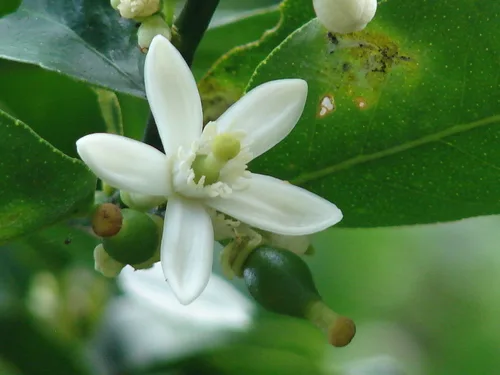
- Pollinator: White, intensely fragrant citrus flowers load nectar alongside other rutaceous bloom waves -- time sprays outside petal fall so honeybees do not become collateral.
- Wildlife Attractor: Split fruit on the ground feeds opossums and mockingbirds -- pick promptly or accept night critters doing cleanup under the canopy.
- Border Plant: Thorny, compact habit fits courtyard pots and small orchard rows -- espalier against walls for frost protection while keeping paths away from spine zones.
Companion Planting
- Walnut
Threats & Pressure