About
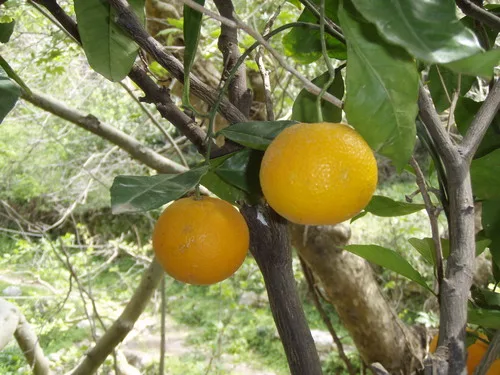
Navel orange is a seedless (or nearly seedless) sweet orange (Citrus sinensis) selection famous for easy-peeling fruit and a secondary ‘navel’ at the blossom end. Evergreen trees carry glossy foliage and heavy spring fragrance, producing table-quality oranges where heat units and irrigation line up in humid subtropical orchards. It is a household staple because fresh-eating quality is high and kitchen waste is minimal compared with seedy types. Full sun drives sugar and peel thickness appropriate to handling. Deep, infrequent watering once established; short pulses that only wet the top few inches train shallow roots and invite stress. Protect blooms and young fruit from advective freezes; mature wood tolerates brief dips better than flowers. Commercial trees are grafted clones so the navel trait stays stable. Seeds do not reproduce true navel morphology—do not plant grocery seeds for this goal. Topworking can convert an older sweet orange scaffold if compatibility and sanitation are respected. Pick when sugar/acid tastes right; navels do not improve off-tree like some pears. Clip stems to avoid torn peel entries for decay organisms. Juice promptly if you freeze; navels can turn bitter in storage compared with juicing oranges—taste small batches first.
Permaculture Functions
- Edible: Washington-type Citrus sinensis navels peel seedless for out-of-hand eating, lunchbox segments, and same-day juice with low rag -- clip stems at harvest so torn peel oil does not invite storage molds in the pantry bowl.
- Medicinal: Whole fruit supplies vitamin C, soluble fiber, and flavonoid-rich peel zest for teas and marmalade -- separate pharmacy timing from drug metabolism because grapefruit-class furanocoumarin interactions still get studied across sweet oranges.
- Pollinator: Heavy spring clusters of waxy white rutaceous flowers dump nectar and pollen on honeybees and native bees during orchard bloom overlap -- avoid broad-spectrum sprays during open flower if you want fruit set and beneficial survival.
- Wildlife Attractor: Split or dropped ripe navels feed mockingbirds, orioles, and rodents along orchard skirts -- leaving some ground fruit builds pest-bird tension, so harvest hygiene balances generosity with fly control.
- Border Plant: Evergreen rounded crown suits front-yard food security, driveway allées, and orchard rows when matched to equipment turning radii -- skirt with mulch, not turf volcanoes, to prevent phytophthora collar rot on graft unions.
Companion Planting
- Walnut
Threats & Pressure