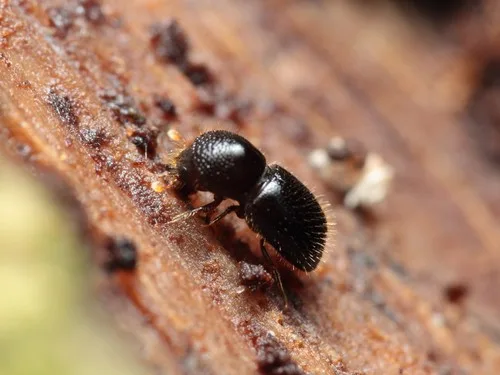
Field Identification
Shot hole borers are tiny ambrosia beetles that bore into trunks and branches, farming fungi in galleries that stain sapwood and disrupt transport. Multiple entry holes look like buckshot on bark, often on stressed or thin-barked species. Some lineages vector pathogenic fungi that cause rapid dieback in certain hosts. They are a tree health issue in urban forests, orchards, and riparian plantings from subtropical to warm temperate zones.
Look for fine boring dust, round entry holes, and sometimes oozing sap. Prune a suspect twig and examine stained galleries. Ethanol-baited traps help monitor flight timing but attract from the neighborhood -- use with extension guidance. Distinguish from bark beetle species complexes by host lists and lab ID where management differs.
Not sure what you have? Use the symptom diagnosis tool →
How to Deal With It
Organic Control Methods
Woodpeckers open galleries and eat larvae where they can reach them. Parasitic wasps attack some scolytines at low rates in native forests. Maintaining tree vigor is the closest thing to biological suppression because healthy trees resist colonization better than stressed ones.
Avoid bark injury from equipment and improper pruning. Remove and chip infested material before flight periods when regulations allow. Do not stack green wood against living trees. Irrigate during drought to reduce stress signals that attract beetles.
Species diversity in plantings reduces landscape-wide risk compared with monoculture rows. Replace known highly susceptible species in chronic loss sites. Whitewash or shade newly exposed bark after sudden canopy removal if sunscald risk is high in your climate.
Cut and destroy heavily infested limbs. For high-value trees, consult an arborist about systemic options where legally available and evidence-based for your pest-host pair. Debark small logs for firewood use if local guidance supports that approach.
Trunk sprays are not reliable once beetles are established under bark. Focus on sanitation and vigor. Some botanical trunk sprays are used professionally at narrow timing windows -- not a default homeowner protocol. Research local extension for species-specific programs rather than improvising.
Let Nature Handle It
Natural Enemies
- Woodpeckers
- Parasitic Wasps
- Predatory Beetles
Threat Map