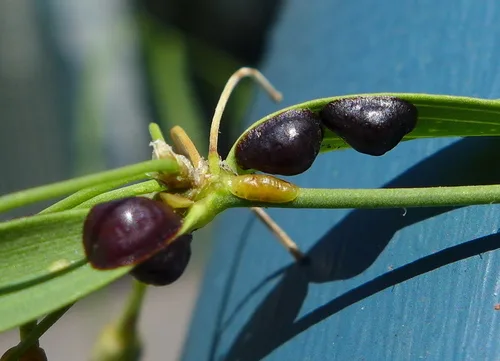
Field Identification
Black scale is a hemipteran soft scale that clamps onto twigs and leaf veins and withdraws phloem sap for long periods. Heavy infestations weaken shoots, reduce fruit size on olives and citrus relatives, and support sooty mold from honeydew. Populations surge when ants protect scales from predators or when dusty roadside trees lack beneficial wash from rain. It is widespread in Mediterranean, subtropical, and mild temperate climates wherever hosts are grown.
Mature females are domed, dark brown to black, and noticeably convex compared with many other soft scales. Crawlers are tiny yellow-orange motile stages that settle along leaf midribs and new growth. Flip leaves to compare with other hemipterans -- aphids move when prodded, armored scales have separable covers. Sticky cards near canopy help time crawler sprays if you use them.
Not sure what you have? Use the symptom diagnosis tool →
How to Deal With It
Organic Control Methods
Metaphycus and Scutellista spp. parasitoids are classic black scale enemies in olive and citrus systems. Lady beetles such as Chilocorus spp. feed on crawlers and small immatures. Lacewing larvae scrape soft stages from bark. Preserve low-growing flowering plants in orchard alleys for adult parasitoid nutrition. Ant control often matters as much as any single predator release.
Inspect nursery trees and reject material with encrusted twigs. Avoid dust buildup on foliage from unpaved roads by planting buffer rows or rinsing canopies periodically where water rules allow. Do not apply foliar nitrogen foliar feeds during crawler peaks unless agronomy requires it. Maintain steady irrigation so stress does not stack with sap removal.
Prune interior water sprouts that harbor dense scale colonies and improve spray coverage. Wash honeydew-coated leaves with plain water in early morning to reduce mold and improve photosynthesis short term. Replace chronic hedge species with less susceptible selections when design allows. Manage Argentine ant supercolonies along trunks with physical barriers where baits are inappropriate.
Scrub small trees with soft brushes and soapy water during winter when populations are exposed on smooth bark. Power wash at gentle angles on tolerant species to dislodge adults before crawlers emerge. Band trunks with horticultural fabric barriers plus sticky compound to block ant access, refreshing sticky before it cakes with debris.
Horticultural oil timed to crawler emergence smothers settled crawlers before wax thickens. Insecticidal soap works on tender flush where complete coverage is achievable. Repeat applications at label intervals because contact products miss sheltered scales under bark plates. Rotate oil and soap weeks apart rather than mixing unknown concoctions that can phytotoxic leaves.
Let Nature Handle It
Natural Enemies
- Parasitic Wasps
- Ladybugs
- Lacewings
Threat Map