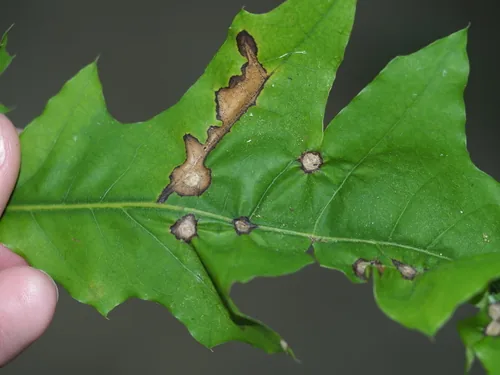
Field Identification
If leaves, stems, or fruit suddenly look spotted, sunken, or rotting, anthracnose may already be active. This problem often starts small, then spreads across healthy tissue before most growers realize how serious it is. Warmth, moisture, and crowded foliage usually speed it up. Treat early, because waiting even a few days can turn a manageable infection into major crop loss.
Look for a pattern, not one bad leaf: expanding spots, dark or pale halos, fuzzy growth, or tissue that collapses when touched. Check both leaf surfaces, stem bases, and fruit scars where symptoms first appear. New lesions after rain, overhead watering, or heavy dew are a strong clue. When separate spots begin merging into larger dead patches, the disease is advancing quickly.
Not sure what you have? Use the symptom diagnosis tool →
How to Deal With It
Organic Control Methods
Bacillus subtilis and Trichoderma products as seed treatments and soil amendments reduce anthracnose infection on beans and vegetables by competing with the pathogen in the soil and rhizosphere. Pseudomonas fluorescens as a seed treatment suppresses some anthracnose pathogens. A diverse and active phyllosphere microbial community on leaf surfaces naturally competes with anthracnose spores. Avoid sterilizing copper sprays that eliminate beneficial competing organisms on plant surfaces.
Anthracnose infects fruit, leaves, and stems causing dark sunken spots with salmon-colored spore masses in wet weather -- the salmon or pink spore masses in lesion centers are distinctive. It spreads primarily by rain splash and overhead irrigation. Use certified disease-free seed -- anthracnose overwinters in infected seed from infected plants. Rotate susceptible crops (beans, tomatoes, cucurbits, strawberries) on 3-4 year cycles. Scout after rainstorms when infection conditions peak.
Avoid working in the garden when plants are wet -- you spread anthracnose spores on hands, tools, and clothing. Sanitize stakes, ties, and tools between plants with 70% isopropyl alcohol. Mulch under plants prevents soil splash -- the primary way anthracnose reaches foliage and fruit from infected soil. Widen plant spacing and trellis where possible for air circulation and faster drying. Remove and bag infected plant material immediately -- never compost anthracnose-infected debris as the pathogen survives composting.
Mulch under plants to prevent rain splash carrying spores from soil to foliage and fruit -- one of the most effective physical interventions. Prune lower branches on trees and shrubs to lift the canopy above the splash zone. Remove infected fruit and leaves immediately and bag for disposal. Drip irrigation rather than overhead completely eliminates the primary infection pathway.
Copper fungicides on a protectant schedule during wet periods are the most effective organic spray -- apply before wet weather on a 7-10 day schedule. Copper must be applied preventively before infection. Bacillus subtilis (Serenade) as part of a rotation provides biological suppression. Sulfur has some efficacy on anthracnose on certain crops. Neem oil has limited curative value but some preventive effect when applied consistently. Rotate materials to prevent resistance and reduce copper accumulation in soil.
Let Nature Handle It
Natural Enemies
- Trichoderma spp.
- Pseudomonas fluorescens
- Bacillus subtilis