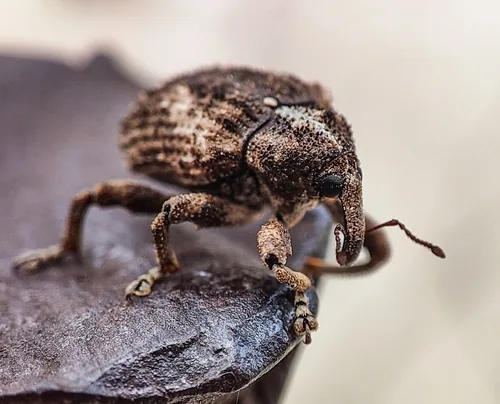
Field Identification
If plants are wilting, notching at the edges, or fruit and roots show hidden feeding damage, mango seed weevil may be the cause. Adults chew above ground while larvae often feed out of sight inside soil, stems, or fruit. Damage builds quietly, then plants crash fast when roots are heavily hit. Act early so a small weevil problem does not become a season-long infestation.
Look for small beetles with a hard body and a distinct snout, usually active at dawn, dusk, or night. Check for crescent-shaped leaf notches, punctures in fruit, or tiny entry holes near stems. In soil or damaged tissue, larvae are often pale, legless, and curved in a C-shape. Fresh chew marks plus snout beetles or C-shaped grubs confirm active weevil pressure.
Not sure what you have? Use the symptom diagnosis tool →
How to Deal With It
Organic Control Methods
Ants sometimes harass adult weevils on trunks; predation is inconsistent. Parasitoid releases exist in research programs overseas -- not a reliable mail-order for a backyard tree. Birds pick adults occasionally. Realistic organic orchards lean on sanitation, bagging, and spray timing rather than purchased parasites. Do not expect chickens to clear a mango canopy.
Adults fly to new flush and young fruit -- do not move fruit or nursery stock out of quarantine zones without legal clearance. Hot-water treatment protocols exist for commercial export; they are not a weekend stove project for home fruit. Pheromone traps where available track flights; rising catches mean tighten harvest and spray windows. Scout pea-sized fruit for pinholes before larvae tunnel to the seed.
Remove fallen fruit weekly so larvae cannot complete in litter under trees. Destroy infested fruit off-site or bury deep; compost piles near trunks become weevil nurseries. Prune trees to heights workers can spray thoroughly -- missed tops leave survivors. Harvest mature fruit promptly; late hanging fruit gives weevils extra oviposition weeks.
Bagging clusters works where labor is affordable -- you exclude adults during egg-lay windows. Pheromone traps monitor males; they rarely clear an orchard alone. For a few backyard trees, nylon socks on clusters exclude some attacks if tied before egg flight.
Neem seed kernel extracts or azadirachtin timed to peak adult activity and flowering flush reduce oviposition when coverage hits panicles and tiny fruit. Pyrethrum gives knockdown on adults where labels allow; short residual means repeat after rain. Spray at dusk to spare pollinators on open mango inflorescences. Cover all sides of inflorescences; weevils attack what sprays miss.
Let Nature Handle It
Natural Enemies
- Parasitic Wasps
- Predatory Ants
- Carabid Beetles
Threat Map