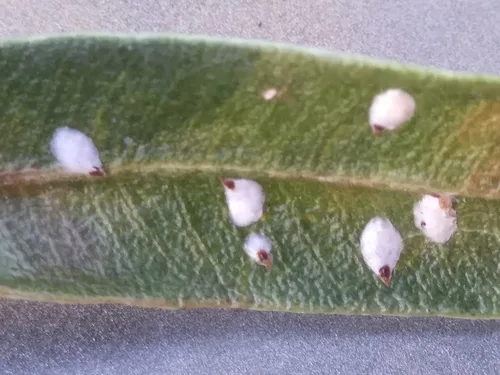
Field Identification
Oleander scale is a circular armored scale that infests oleander, citrus relatives, orchids, and many broadleaf ornamentals. It sits flat on leaves and stems under a central cover, removing sap and causing yellow speckling, die-back, and sooty mold if honeydew-producing partners are nearby. Outbreaks follow dusty foliage, ant tending, or repeated sprays that remove parasitoids.
Use a lens: the cover is separate from the insect body underneath, unlike soft scales. Males are tiny winged forms on some armored species but you mostly see round female covers. Look for concentric rings on the cover surface. Crawler timing varies by climate -- use tape traps on stems during warm months.
Not sure what you have? Use the symptom diagnosis tool →
How to Deal With It
Organic Control Methods
Aphytis and other parasitoids attack Aspidiotus on various hosts where ant interference is low. Lady beetle Chilocorus stigma feeds on small scales. Preserve flowering insectaries. Release programs are situational -- home gardens usually succeed faster with oil timing plus ant barriers than with purchased wasps.
Inspect nursery plants, especially orchids and conservatory specimens, before mixing collections. Rinse dust from greenhouse leaves so predators hunt effectively. Avoid calendar pyrethroid drenches for unrelated pests.
Prune heavily infested canes on oleander and dispose off-site. Improve canopy airflow on dense shrubs. Replace chronically infested hedge runs when design allows. Manage ants on trunks with sticky barriers where appropriate.
Scrape scales off small orchid leaves with a soft plastic tool -- support the leaf from below. For larger shrubs, power rinse at gentle settings tests on a branch first. Double-sided tape captures crawlers during hatch peaks.
Horticultural oil timed to crawler emergence is the backbone of armored scale control. Summer oil rates require temperature windows on labels. Insecticidal soap helps on smooth leaves where coverage reaches crawlers. Rotate weeks between oil and soap rather than stacking unknown mixes.
Let Nature Handle It
Natural Enemies
- Parasitic Wasps
- Ladybugs
- Predatory Beetles