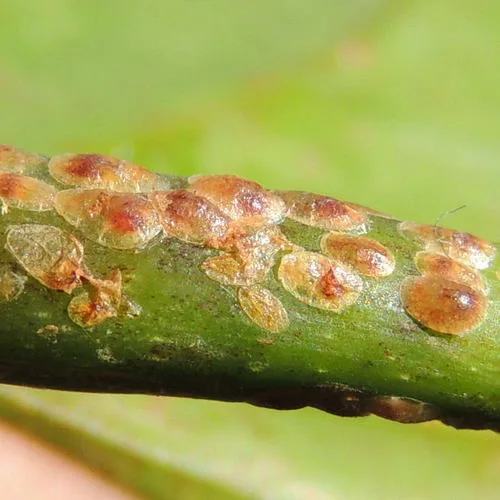
Field Identification
Brown soft scale is a common greenhouse and landscape soft scale with a flexible brown oval cover fused to the insect body. It excretes honeydew that grows sooty mold and attracts ants. Feeding weakens houseplants, citrus, and many broadleaf ornamentals. Outbreaks often follow systemic stress, dusty foliage, or repeated broad-spectrum sprays that remove predators.
Adults look like tiny brown helmets stuck to veins on the underside of leaves and along stems. Unlike armored scales, the body is soft when probed gently with a pin. Honeydew droplets on leaves or pots below are a strong clue. Crawlers are pale yellow and mobile for a short window -- use a hand lens and side lighting to see movement.
Not sure what you have? Use the symptom diagnosis tool →
How to Deal With It
Organic Control Methods
Metaphycus helvolus and other encyrtid wasps parasitize brown soft scale in commercial citrus and interiorscape settings. Lady beetles such as Cryptolaemus montrouzieri target mealybugs but also eat soft scales when present. Lacewings and predatory mirid bugs contribute in diverse plantings. Release biocontrol agents only after ant barriers are addressed or releases may fail.
Quarantine new houseplants two meters from the collection for a fortnight while inspecting undersides weekly. Rinse dust from foliage in dry climates so predators can walk surfaces. Avoid overfeeding soluble fertilizer on already infested plants, which increases honeydew volume. Inspect cut flowers and holiday greenery that sit near susceptible plants.
Prune the most heavily encrusted stems on shrubs to reduce density. Improve air movement in greenhouses with fans and spacing. Swap to subirrigation for bench crops to reduce humidity on leaf undersides if design allows. Remove badly infested specimens when renovation is cheaper than repeated treatments.
Wipe leaves with diluted castile soap on a soft cloth for small collections -- support the leaf from below to avoid tearing. Shower sturdy plants with lukewarm water weekly until honeydew stops. For outdoor trees, trunk banding against ants raises biocontrol success more than another random soap spray.
Insecticidal soap plus thorough coverage knocks crawlers and small nymphs. Horticultural oil at summer rates labeled for your plant kills settled stages when temperatures stay within label limits. Neem oil disrupts molting when applied on schedule -- avoid spraying open flowers visited by pollinators. Always test a branch first because some cultivars oil-burn easily.
Let Nature Handle It
Natural Enemies
- Parasitic Wasps
- Ladybugs
- Lacewings