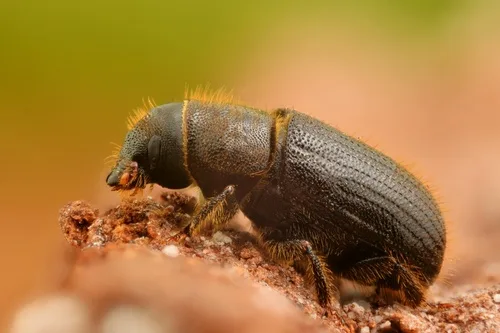
Field Identification
Ambrosia beetles are tiny wood-boring weevils that farm symbiotic fungi inside stems and trunks. The first sign is often wilting or die-back on a branch that still looks green, paired with fine sawdust or toothpick-like strands at the base. They target stressed, thin-barked trees and shrubs across temperate to subtropical zones. Catching them early matters because galleries disrupt vascular flow and open pathways for decay organisms.
Look for multiple round entry holes about the diameter of a pencil lead on trunks or large limbs, often on the sunny side or where bark was damaged. Frass may accumulate in bark crevices or on the ground. Cut a suspect twig and you may see dark staining in the sapwood from ambrosia fungus. They are active when nights are mild; monitoring is easiest with ethanol-baited traps placed near vulnerable plantings.
Not sure what you have? Use the symptom diagnosis tool →
How to Deal With It
Organic Control Methods
Woodpeckers and other bark-foraging birds probe beetle galleries and eat larvae when they can reach them. Parasitic wasps attack some scolytine species in forest systems, though they rarely give complete control in ornamental settings. Maintaining diverse native vegetation supports generalist predators that reduce beetle pressure at the landscape scale. Healthy trees with strong cambial flow are less attractive than stressed hosts, so biological suppression works best alongside cultural stress relief rather than as a spray substitute.
Avoid mechanical bark injury from mowers, string trimmers, or careless staking, because fresh wounds release ethanol signals that draw beetles from long distances. Irrigate during dry spells so young trees do not enter dormancy-like stress in warm weather. Remove and chip or burn severely infested material before flight periods when local regulations allow. Do not pile fresh cut wood near vulnerable orchards or nursery blocks during peak emergence.
Select species and rootstocks suited to your site drainage and sun exposure so cambium stays vigorous. Paint large pruning cuts on thin-barked species only when extension guides recommend it for your crop, because improper painting can trap moisture. Whitewash trunks in high-insolation sites if sunscald is a recurring issue, since sunscald injury invites attack. Mulch outward from the flare without burying bark, because buried flare roots stress trees and mimic transplant shock signals beetles cue on.
Prune and destroy infested limbs showing sawdust tubes or oozing before beetles complete another generation. For high-value single specimens, consult an arborist about cabling versus removal when structural wood is compromised. Banding sticky traps around trunks is rarely effective alone but can help monitor flight timing when combined with ethanol lures. Solarization or chipping infested material reduces local emergence more than leaving logs in a brush pile.
There is no reliable organic foliar spray that stops ambrosia beetles once they are under bark. Neem and horticultural oils target many soft insects but do not reach gallery inhabitants. Focus budget and labor on prevention, sanitation, and tree vigor instead of repeated trunk sprays. Some research explores repellent formulations for professional use; home growers get better results from timing pruning and reducing stress than from bottle products.
Let Nature Handle It
Natural Enemies
- Woodpeckers
- Parasitic Wasps
- Predatory Beetles
Threat Map