Field Identification
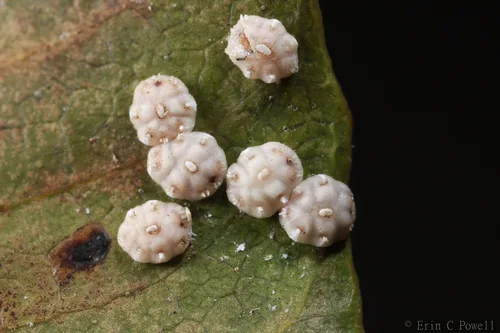
Florida wax scale is a globular soft scale that builds thick white to pink wax plates over its body on twigs and leaf undersides. It excretes honeydew that grows sooty mold and attracts ants. Heavy infestations weaken branches on magnolia, holly, citrus relatives, and many broadleaf ornamentals in humid subtropical to tropical climates and warm temperate microclimates.
Adults look like tiny irregular wax ornaments glued to stems -- not the flat disks of armored scales. Flip leaves to find pinkish crawlers along veins in spring and summer generations. Honeydew speckling on leaves below infested branches is a tell. Use a lens to separate from mealybugs, which are more filamentous and mobile.
Not sure what you have? Use the symptom diagnosis tool →
How to Deal With It
Organic Control Methods
Metaphycus and Scutellista parasitoids attack related soft scales in citrus systems and may contribute in landscapes. Lady beetles such as Chilocorus stigma feed on soft scales when crawlers are exposed. Lacewing larvae scrape young stages. Ant management is often prerequisite to predator success because ants defend honeydew sources aggressively.
Inspect new nursery stock on twigs and leaf midribs before planting. Reduce dust on foliage with occasional rinsing where water use is responsible. Avoid repeated broad-spectrum sprays for other insects that crash predator guilds. Space shrubs for canopy airflow so sprays reach inner wood if you need them.
Prune out the most encrusted twigs on large shrubs to lower local reproduction. Remove epicormic sprouts that harbor dense colonies. Replace chronically infested hedge runs with mixed species designs when aesthetics allow. In greenhouses, quarantine tropical material from humid suppliers.
Scrub small specimens with soft brushes and soapy water during cooler parts of the day. Trunk banding with sticky plus fabric barrier reduces ant traffic while predators work. Pressure rinse can dislodge wax covers on tolerant species -- test a branch first.
Horticultural oil timed to crawler emergence smothers exposed stages before wax thickens. Insecticidal soap helps on smooth leaves where spray reaches all surfaces. Neem can suppress feeding when used on schedule. Do not tank-mix unknown oils and soaps at high rates or you risk leaf burn in heat.
Let Nature Handle It
Natural Enemies
- Parasitic Wasps
- Ladybugs
- Lacewings