About
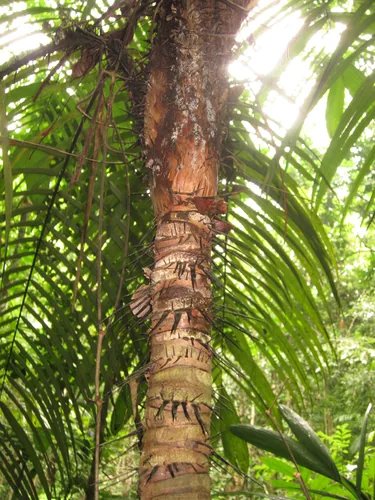
Tucumã (Astrocaryum vulgare) is a solitary, heavily armed palm of Amazonian forests and secondary growth, with long spines on petioles and trunk and orange, oily mesocarp around a hard endocarp. It reaches forest stature over many years; juvenile plants are rosettes of viciously spiny leaves before a trunk lifts the crown. The species is valued regionally for pulp, oil, and craft fiber from leaf bases and spines. In Puerto Rico and tropical and subtropical zones it is a niche palm for collectors in frost-free sites; spines and cold sensitivity make it unsuitable for high-traffic yards. Humid heat matches its ecology; drought slows growth but established palms tolerate seasonal dry periods with deep soil moisture. Full sun once established in humid tropics; young palms benefit from high canopy or dappled shade to reduce leaf scorch during establishment. Deep, fertile, well-drained soil with reliable moisture in the warm season; avoid chronic waterlogging around the root zone. Plan access paths—every petiole is a lesson in respect. Sow fresh seed in warm, humid conditions; germination is slow and sporadic as seed viability drops with age. Transplant seedlings with care; spines begin early. Harvest ripe fruit when color and local practice indicate peak oil and pulp quality; processing is labor-intensive and traditionally skilled. Fiber harvest ties to pruning and craft schedules where traditional knowledge exists.
Permaculture Functions
- Edible: Astrocaryum vulgare mesocarp is oily and orange -- regional kitchens render pulp for cooking fat where processing tolerates labor and spines.
- Fiber: Black spines and fibrous leaf sheaths become cordage, basketry, and tucum rings in Amazonian craft -- harvest respects armor; this is not a barefoot yard palm.
- Wildlife Attractor: Large oily drupes feed agoutis, peccaries, and big frugivorous birds in native forest -- fallen fruit in a Florida collector yard will recruit every curious raccoon analogue.
Companion Planting
Threats & Pressure