About
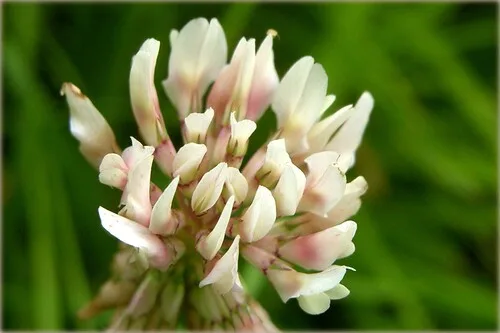
White clover (Trifolium repens) is a creeping perennial legume grown as a living mulch, pasture component, and cover crop. It is native to Europe and western Asia and forms low mats with trifoliate leaves and white flower heads. Plants typically spread widely and can reach about 10–25 cm (4–10 in) tall in grazed or mowed systems. In permaculture, it matters because white clover fixes nitrogen through root nodules, supplies frequent leaf biomass when you mow, and supports pollinators with accessible blooms in cool seasons. Full sun to partial shade; it performs best with enough light to bloom. Moderate water for establishment; once rooted it tolerates typical rainfall patterns. Prefers well-drained, fertile soils and benefits from compost inputs. Avoid long waterlogged periods that thin stands and weaken roots. Seeds (spring sow): direct-sow and keep soil evenly moist; germination often occurs within 5–10 days. Seeds (overseeding): overseed into existing grass/groundcover for thicker living mulch. Division: split established patches in cool seasons and replant with consistent moisture. For mulch: mow/cut frequently at a height that keeps crowns protected; residues can be chop-and-dropped. For pollinators: allow some blooms and avoid mowing everything at once. For seed: let some stands flower fully and mature seed heads before collecting.
Permaculture Functions
- Nitrogen Fixer: Trifolium repens stolons root every few nodes and nodulate along the whole runner -- that steady low N drip feeds alley-cropped fruit trees without tall herbage shading trunks.
- Mulcher: Weekly mower passes at three inches drop fine leaf chips that slip between vegetable leaves without matting like grass -- residue breaks down fast enough that spring brassicas do not yellow from carbon tie-up.
- Pollinator: White globes sit at bee belly height on paths and orchard floors during cool mornings when canopy trees offer little bloom -- syrphid flies use the shallow nectar for egg loads next to aphid-prone rows.
Companion Planting