About
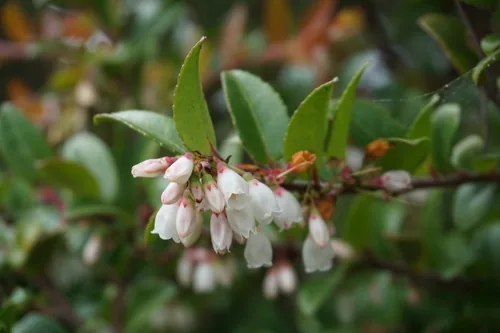
Evergreen huckleberry (*Vaccinium ovatum*) is a West Coast native shrub with small leathery leaves, pinkish urn-shaped flowers, and dark sweet-tart berries. It typically forms a dense mound 3–8 feet tall in sun or part shade, taller in dim forest edges. In subtropical and tropical Americas it is a collector's acid-soil plant—think pine bark, peat-free ericaceous mixes, and reliable irrigation without waterlogging; lowland heat and alkaline water make it a challenge without deliberate soil management. Morning sun with afternoon shade, or bright dappled shade all day. Keep root zone moist and acidic; drip irrigation beats overhead watering during humid spells to reduce leaf spot pressure. Softwood cuttings: Take semi-ripe cuttings in summer, use rooting hormone, and keep humid until roots form. Seeds: Cold-moist stratify seed for several weeks, then sow in acidic medium; seedlings are slow but true to type. Berries ripen dark purple-black, often late summer into fall depending on climate. Pick when fully soft; flavor improves after a light frost in climates that freeze, but in frost-free sites judge by color and tug.
Permaculture Functions
- Edible: Vaccinium ovatum black-purple berries stay tart-sweet for pies and syrups when picked fully soft through late summer into fall -- flavor often improves after light frost where frosts exist on West Coast acid mounds.
- Wildlife Attractor: Pink-tinged urn corollas feed early bumble queens -- while ripe fruit feeds varied thrush and small mammals under evergreen canopies from California fog belts into zone 7-10 collector gardens.
- Border Plant: Glossy three-to-eight-foot mounds stay evergreen along shaded paths beside rhododendrons -- where drip irrigation keeps root zones moist without leaf-spot-promoting overhead spray habits.
- Erosion Control: Fibrous shallow roots knit mossy forest banks under fir and oak drip lines better than shallow ryegrass sod on slopes -- where foot traffic would otherwise bare soil each winter.
- Ornamental: Bronzy new flush and neat dense habit sell nursery pots even on sites -- where single specimens set lighter fruit loads than wide drifts of mixed clones.
Companion Planting