About
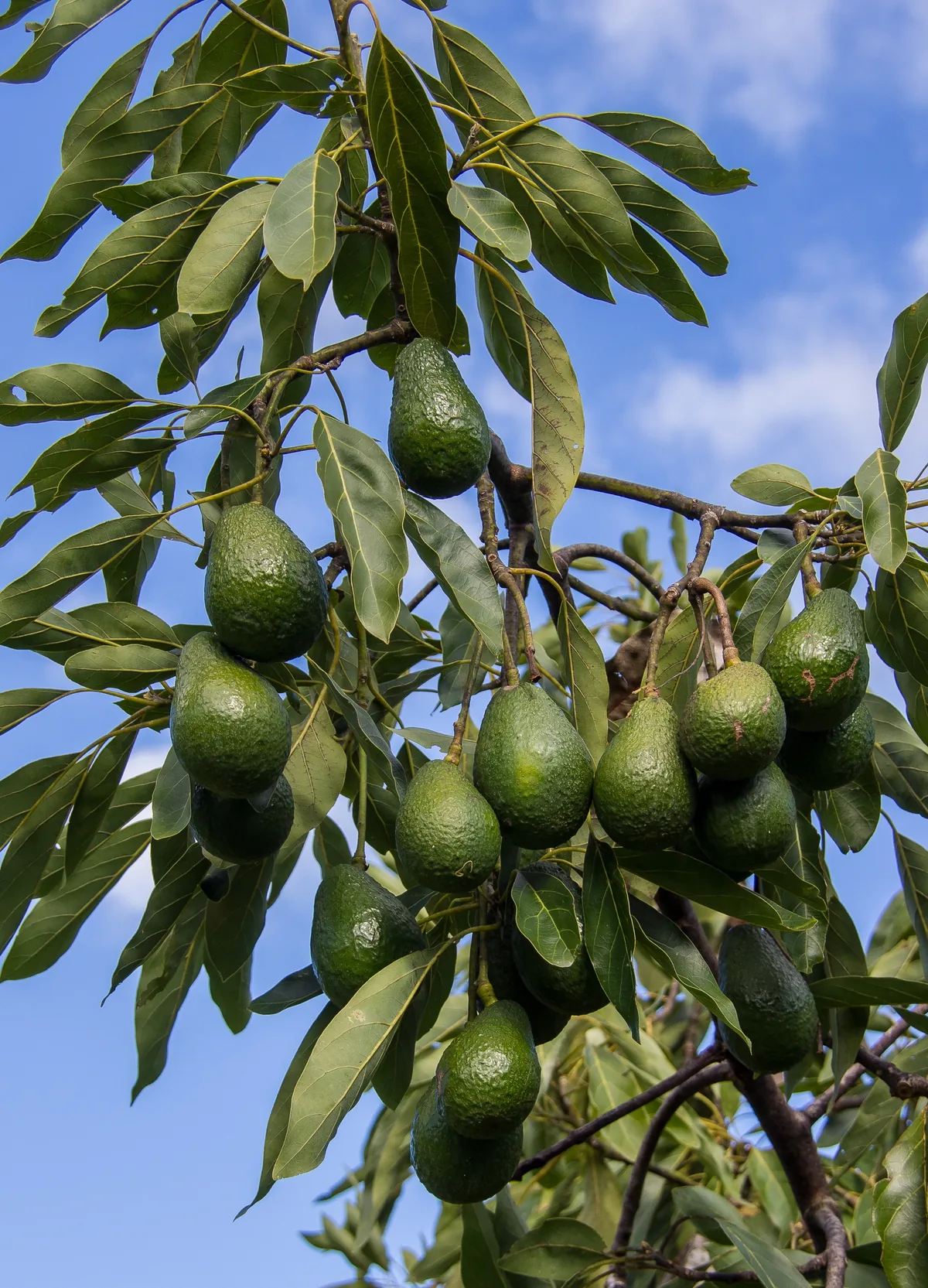
The Avocado tree is a fast-growing, evergreen tree that can reach heights of 12-18 meters (40-60 feet), depending on the variety. It has large, dark green, glossy leaves and produces small, greenish-yellow flowers. The tree bears large, pear-shaped fruits containing creamy, nutrient-rich flesh surrounding a large seed. Avocado trees require well-drained, rich soil and thrive in warm, humid environments. Avocado trees require full sun and grow best in well-drained, sandy or loamy soils with a slightly acidic to neutral pH. They need consistent moisture but do not tolerate waterlogging. Mulching helps retain soil moisture and regulate temperature. Avocados can be propagated from seeds, but for consistent fruit quality, grafting onto rootstock is preferred. Seed-grown trees can take 8-10 years to bear fruit, while grafted trees start producing within 3-5 years. Avocado fruit does not ripen on the tree. Harvesting occurs when fruits reach full size, typically 6-12 months after flowering. Fruits are picked while still firm and allowed to ripen at room temperature.
Permaculture Functions
- Edible: Persea americana fruit ripens off-tree once mature-green with tight stem buttons -- Hass-type skins turn near-black while West Indian lines stay green, so color is not universal truth for pick timing.
- Medicinal: Cold-pressed fruit oil carries oleic acid and sterol-rich lipid fraction used in topical salves -- internal heart-health claims track monounsaturated fat swaps, not magic single-fruit cures.
- Wildlife Attractor: Small greenish panicle flowers drip nectar for honeybees while ripe drops feed opossums and rats if you slack on harvest -- Type-A and Type-B flowering overlap still matters for human-grade set.
- Windbreaker: Evergreen laurel-family canopy slows desiccating trade winds across banana and coffee understories once trunks lignify -- leave skirt fronds if psyllid sprays are not part of your ethics.
- Border Plant: Multi-stem forms mark subtropical orchard edges with glossy leaves -- keep mulch back from collars because Phytophthora loves wet bark contact more than you love guacamole.
Companion Planting
- Onion
Threats & Pressure