About
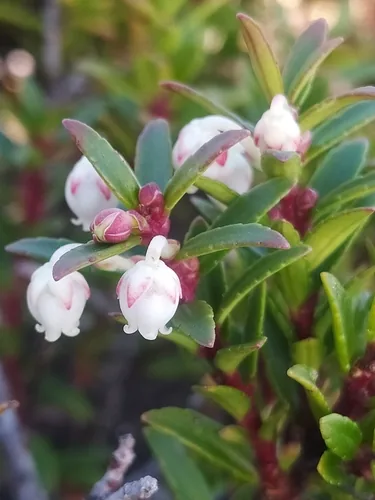
Salal (Gaultheria shallon) is a Pacific Northwest evergreen shrub forming thickets of leathery, oval, alternate leaves on arching stems; small white to pink urn-shaped flowers yield dark purple edible berries. In the wild it ranges from ground-hugging mats in sun to 3–5 foot thickets in shade, spreading by rhizomes into extensive colonies under conifers and oaks. Part shade to full shade in hot climates; cool, humid air mimics its native coast. Morning sun with afternoon shade works in milder subtropical microclimates. Likes evenly moist, acidic, organic-rich soil with good mulch; in subtropical and tropical Americas lowland heat it is marginal—treat as a specialty plant in shaded, misted courtyards or cool high-elevation-style beds, not as a bulk groundcover. Rhizome division: lift and separate rooted sections in cool wet weather, keeping roots moist. Seeds: cold stratify, surface-sow in acidic mix; slow but useful for breeding diversity. Berries ripen dark and slightly soft in late summer to fall where climate allows; leaves are used decoratively year-round. Harvest leaves selectively so colonies regenerate.
Permaculture Functions
- Edible: Gaultheria shallon purple berries ripen late summer to fall with sweet-tart pop and mealy texture that jam and wine forgive -- glossy evergreen sprays pass for florist-grade cut material if you rotate harvest canes.
- Ground Cover: Rhizomes wander into weed-suppressing mats under conifer drip lines -- where turf dies from acidity and shade.
- Wildlife Attractor: Urn-shaped blooms feed native bees in cool maritime air -- while thickets give cover for ground-foraging birds that take the berries you miss.
- Erosion Control: Interlaced stems knit duff and mineral soil on damp cut banks and shaded road edges -- where sheet flow would otherwise peel the slope.
Companion Planting