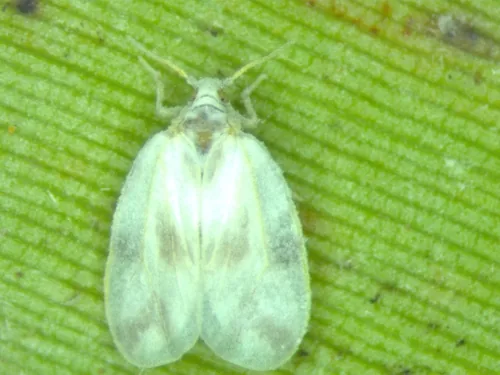
Field Identification
If leaves show trails, fruit turns soft, or roots collapse from inside, rugose spiraling whitefly may already be feeding. The larval stage does most of the damage, often hidden where you cannot see it at first glance. By the time yellowing or rot appears, feeding may be well underway. Move quickly when symptoms begin to prevent another wave of eggs and larvae.
Watch for tiny eggs near plant tissue, pale legless larvae inside mines or fruit, and sudden soft spots or tunnels. Adults are usually small flies that hover or dart when disturbed. Check around wounds, blossoms, and moist plant debris where egg-laying is common. Cut open suspect tissue: live maggots or fresh tunnels are the clearest field confirmation.
Not sure what you have? Use the symptom diagnosis tool →
How to Deal With It
Organic Control Methods
Lady beetles including specialist whitefly feeders and lacewings attack rugose spiraling whitefly when wax is still thin -- established landscapes often harbor parasitoids if sprays do not flatten them weekly. Fungi infect whiteflies in humid weather. Manage ants that farm honeydew and chase predators away from colonies.
Inspect nursery stock twice before planting; quarantine new installs in a side yard for two weeks. Early detection walks on favored hosts -- palms, ficus, and other common carriers -- catch outbreaks before wax spirals cover every leaf. Train crews to look at new flushes, not just old damage.
Prune severely infested terminals when tolerable so inner canopy opens for sprays and predators. Reduce drought or nutrient stress; stressed plants flag damage faster. Break ant trails with sticky bands or bait stations where labels allow so predators reach whiteflies.
Strong rinsing on smaller specimens dislodges wax and crawlers -- repeat every few days. Remove fallen leaves under infested trees in courtyards; crawlers walk from litter back into canopy. Fine mesh on high-value specimen pots excludes adults during flights.
Oils and soaps aimed at crawlers on new growth work when timed to crawler emergence -- heavy wax needs repeat applications. Test a leaf for burn before coating the whole palm. Neem reduces feeding on tender flushes. Rotate oils and soaps; whiteflies select resistance in treated blocks. Spray cool mornings.
Let Nature Handle It
Natural Enemies
- Lady beetles (including specialist whitefly feeders)
- Lacewings
- Parasitic wasps (Encarsia/Eretmocerus where they establish)