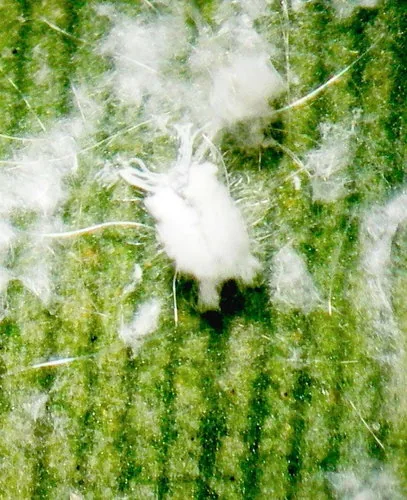
Field Identification
If leaves show trails, fruit turns soft, or roots collapse from inside, spiraling whitefly may already be feeding. The larval stage does most of the damage, often hidden where you cannot see it at first glance. By the time yellowing or rot appears, feeding may be well underway. Move quickly when symptoms begin to prevent another wave of eggs and larvae.
Watch for tiny eggs near plant tissue, pale legless larvae inside mines or fruit, and sudden soft spots or tunnels. Adults are usually small flies that hover or dart when disturbed. Check around wounds, blossoms, and moist plant debris where egg-laying is common. Cut open suspect tissue: live maggots or fresh tunnels are the clearest field confirmation.
Not sure what you have? Use the symptom diagnosis tool →
How to Deal With It
Organic Control Methods
Nephaspis oculatus and other coccinellids eat spiraling whitefly eggs and nymphs on palms and ornamentals when wax is not too thick yet. Parasitic fungi infect whiteflies in humid microclimates; they need moisture, not desert wind. Conserve generalists by avoiding calendar oil sprays -- predators die while whiteflies laugh in wax.
Inspect every new landscape plant; isolate suspect material for two weeks and scout new flushes with a lens. Remove abandoned hosts near jobs that bridge generations year-round. Screen greenhouse doors before adults ride trucks in from infested blocks.
Prune heavily infested fronds or branches when feasible so sprays reach inner canopy. Improve air movement in palm crowns; spiraling damage worsens in stagnant humidity. Avoid overhead irrigation patterns that wet leaves all night without washing off honeydew -- you trade whiteflies for foliar disease.
Water wash accessible foliage to dislodge wax and crawlers on small plants -- repeat every few days during flare-ups. Pressure-wash trucks and equipment between infested and clean sites so whiteflies do not tour on rubber. Yellow sticky cards at eye level track adults.
Insecticidal soap and horticultural oil need thorough coverage on new flushes -- repeat on crawler peaks, not random Mondays. Neem reduces feeding on tender growth; expect multiple applications on waxy palms. Spray in cool mornings to reduce phytotoxicity; test a frond first. Reapply after rain.
Let Nature Handle It
Natural Enemies
- Nephaspis oculatus
- Generalist lady beetles
- Lacewings