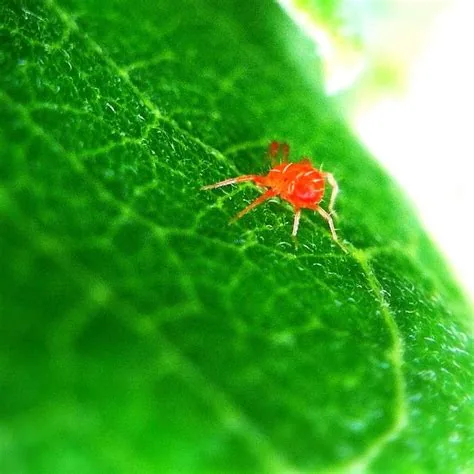
Field Identification
If leaves look dusty, speckled, bronzed, or curled without obvious chewing, mites is a likely suspect. Mites are tiny but can multiply fast, especially during heat and dry air. Plants lose vigor as feeding drains cell contents from leaves and tender growth. Early action matters, because heavy infestations can spread through a bed in days.
Use a hand lens and check leaf undersides first, especially near veins and new growth. Look for pinprick stippling, fine webbing in some species, and tiny moving dots that range from pale to red or brown. Tap a leaf over white paper; moving specks suggest active mites. Stippled leaves plus mites or eggs clustered under foliage confirms the diagnosis.
Not sure what you have? Use the symptom diagnosis tool →
How to Deal With It
Organic Control Methods
Predatory mites such as Phytoseiulus and Neoseiulus species hunt spider mites when humidity stays above fifty percent and broad sprays stop. Lady beetles and lacewings eat mites on open leaves. Buying predators works only after you end calendar pyrethrin; otherwise you donate money to insectaries weekly.
Scout leaf undersides weekly with a lens during hot, dry weather -- stippling shows up before webs. Quarantine new nursery stock; mites ride wind and clothing. Flag beds that bronzed last year; drought stress invites repeat flare-ups.
Space and prune for air movement, but remember spider mites love hot dry air -- humidity management matters as much as spacing. Avoid nitrogen dumps that push soft growth every flush. Keep soil moisture even; drought-stressed plants flag mites before they flag thirst.
A strong jet of water aimed at leaf undersides knocks mites off -- repeat every two to three days for two weeks to break a generation. Sticky traps catch adults dispersing in greenhouses; they monitor more than control. For small plants, wipe leaves with a damp cloth.
Neem oil and insecticidal soap contact mites and eggs when coverage is thorough -- add spreader on waxy leaves. Spray at dusk to reduce sunburn and to spare predators active by day. Reapply after rain; short residual means overlapping generations need repeat apps. Rotate sulfur, soap, and neem in tunnels to slow resistance.
Let Nature Handle It
Natural Enemies
- Predatory Mites
- Ladybugs
- Lacewings
Threat Map