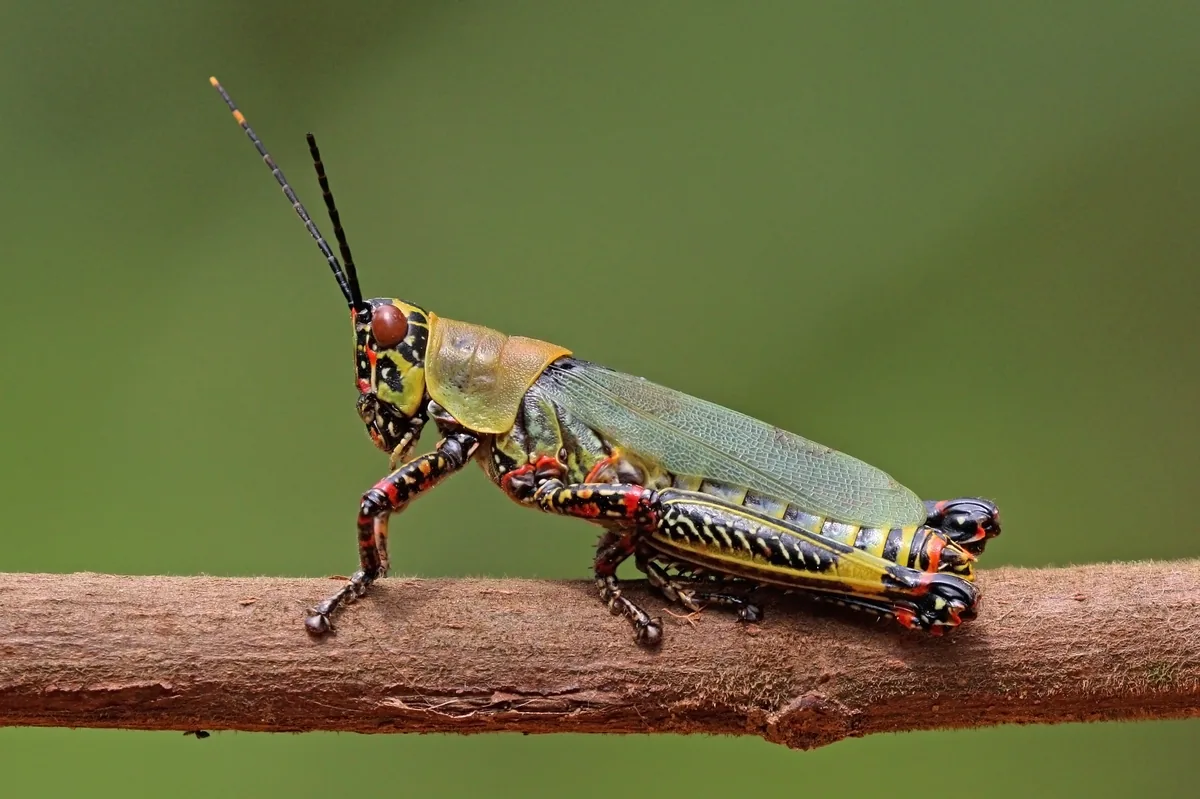
Field Identification
If new growth is curling, yellowing, sticky, or chewed, grasshopper may already be on the plant. This pest often builds quietly, then damage appears all at once. Feeding stress weakens growth, reduces yield, and opens the door to secondary disease. Early cleanup is much easier than fighting a full population surge later.
Inspect the newest growth first: leaf undersides, flower buds, stem joints, and tender tips where pests gather. Look for body shape, color, eggs, cast skins, honeydew, webbing, or fresh puncture marks. A hand lens and a white paper tap test help reveal small life stages. Matching visible pests with fresh plant damage confirms active infestation.
Not sure what you have? Use the symptom diagnosis tool →
How to Deal With It
Organic Control Methods
Nosema locustae is a naturally occurring protozoan parasite of grasshoppers available as a biological bait (Semaspore, Nolo Bait) -- young hoppers that eat treated bran become infected and die within weeks, and the pathogen spreads through the population as infected hoppers are eaten by others. Apply in spring when nymphs are young and small for best results. Blister beetle larvae eat grasshopper egg pods in soil -- leave areas of bare compacted soil undisturbed where blister beetles lay eggs. Robber flies, ground beetles, spiders, and birds consume grasshoppers in diverse landscapes.
Grasshoppers lay eggs in dry undisturbed soil in late summer -- roadsides, field margins, and weedy areas are primary egg-laying sites. Scout ditches and roadsides for nymph bands in late spring before adults can fly. Nymphs are wingless and localized -- a nymph band in one spot is far easier to manage than dispersed flying adults. Tillage of egg-laying areas in fall and early spring exposes egg pods to birds and desiccation. Row covers on seedlings provide complete protection during peak grasshopper pressure.
Mow fallow strips and field margins to reduce the rank grass grasshoppers prefer for egg-laying and early feeding. Trap crops of lush cereal grains or sunflowers at field edges pull grasshoppers away from vegetables -- destroy or vacuum trap crops when hoppers concentrate. Diverse plantings dilute grasshopper pressure compared to monocultures of preferred hosts. Maintain irrigation -- healthy plants tolerate grasshopper feeding better than stressed ones.
Row covers provide complete protection for seedlings during peak grasshopper flights -- the most reliable mechanical control. A handheld vacuum or net captures adults and nymphs on small garden plantings -- mostly effective as a satisfaction activity at garden scale. Barrier strips of tall dense plants at garden edges slow adult movement into beds.
Nosema locustae bran bait scattered where nymphs are feeding is the most ecologically sound option -- apply in spring when hoppers are young and susceptible, effectiveness builds over weeks as the pathogen spreads. Beauveria bassiana bran bait kills grasshoppers on contact and spreads through populations. Neem oil (azadirachtin) disrupts hopper molting and reduces feeding on treated plants. Pyrethrin provides quick knockdown but degrades in hours and harms all insects -- last resort only at dusk for overwhelming infestations on high-value crops.
Let Nature Handle It
Natural Enemies
- Robber Flies
- Ground Beetles
- Spiders
Threat Map