About
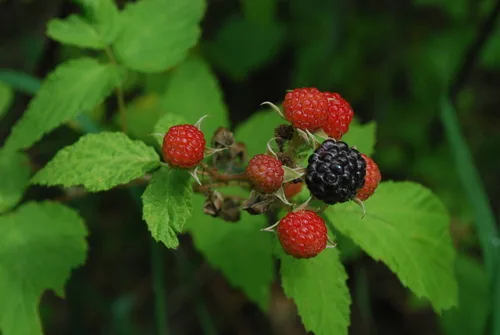
Black raspberry (Rubus occidentalis) is a native North American bramble with arching biennial canes, whitish bloom on purple-black stems, and compound leaves with silvery undersides. It forms colonies in woodland edges, openings, and old fields, bearing small, sweet, deep purple to black aggregate berries that detach cleanly from the receptacle. Height is typically 1 to 2 meters (3 to 6 feet) with suckering roots that expand the patch over time. It is valued in temperate permaculture hedgerows and forest garden margins for early summer fruit, wildlife cover, and erosion control on slopes where thorny stems discourage browsing. Plant in full sun to light shade with well-drained, humus-rich, slightly acidic soil. Mulch to keep roots cool and moist; avoid low spots that stay saturated in winter. Propagate by tip layering canes in late summer, digging rooted tips the following spring, or transplant root suckers while dormant. Softwood cuttings under mist also work in early summer. Pick berries when they pull easily and shine fully dark; harvest every day or two during peak because they do not hold on the plant once ripe. Prune out spent floricanes after harvest and thin young canes for air movement.
Permaculture Functions
- Edible: Berries are softer and more aromatic than many red raspberries -- excellent fresh, frozen, or cooked where deep color stains indicate anthocyanin content.
- Medicinal: Leaf teas appear in older herbals for mild astringent use -- align with qualified guidance rather than self-dosing for serious conditions.
- Pollinator: Rosaceous flowers offer pollen and nectar to early-season bees -- timing bridges spring ephemerals and midsummer forage.
- Wildlife Attractor: Fruit feeds birds and small mammals; thorny thickets provide nesting cover -- place blocks away from narrow paths if pedestrians dislike scratches.
- Erosion Control: Fibrous roots and suckering habit stabilize disturbed banks -- combine with taller shrubs upslope to slow runoff.
Threats & Pressure