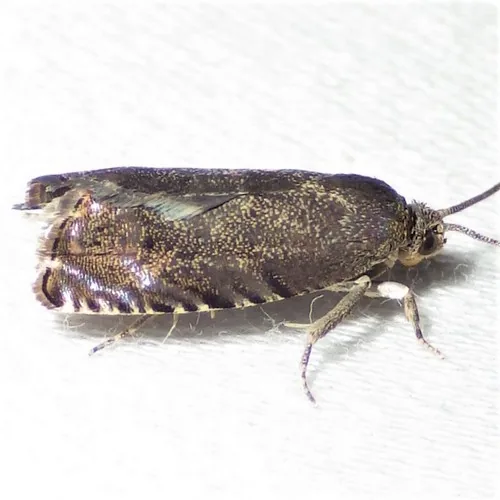
Field Identification
If leaves look shredded overnight or fruit has fresh chew holes, hickory shuckworm may be feeding right now. These larvae can eat fast and strip a healthy plant in a short window. Young stages are easy to miss, then damage suddenly explodes as they grow. Catch them early to avoid severe defoliation and contaminated harvests.
Check leaf undersides, growing tips, and stem junctions for eggs, frass pellets, and feeding scars. Larvae vary in color, but most have a soft segmented body and blend into foliage. Look at dusk or early morning when many species feed more actively. Fresh chewing plus live larvae or droppings on lower leaves confirms an active caterpillar outbreak.
Not sure what you have? Use the symptom diagnosis tool →
How to Deal With It
Organic Control Methods
Trichogramma wasps parasitize moth eggs in research and commercial nut IPM when releases match flight -- not a hobby kit for one backyard tree. Braconid and ichneumonid wasps attack larvae in shucks if sprays stay selective. Preserve these helpers by avoiding blanket pyrethrin during peak parasitism; you trade cheap chemistry for expensive worms.
Hang pheromone traps to mark biofix when moths first fly -- that date sets egg-hatch sprays. Scout shucks for entry holes and frass about two weeks after peak trap catch. Flag trees that showed shuck damage last year; larvae often reinfest the same neighborhood.
Remove alternate hosts such as late corn near orchards that hold extra moths. Destroy fallen infested nuts so larvae cannot pupate in litter. Open canopy modestly for predator access without sun-scalding nuts -- balance shade and airflow. After harvest, shred husks promptly where equipment allows.
Mating disruption dispensers work on large contiguous pecan or hickory acreage; single backyard trees rarely justify the investment. For home trees, bag clusters or accept some loss and focus on sanitation. Prune low branches that touch grass and splash spores and insect eggs into canopy.
Bacillus thuringiensis kurstaki and spinosad target small larvae after nut set -- coverage inside shucks is tough, so time sprays to egg hatch from trap biofix, not the calendar. Use enough water volume to penetrate clusters. Reapply after rain. Bt stops working once larvae tunnel deep in shucks; early timing beats late heroics.
Let Nature Handle It
Natural Enemies
- Trichogramma spp.
- Braconid Wasps
- Ichneumonid Wasps
Threat Map