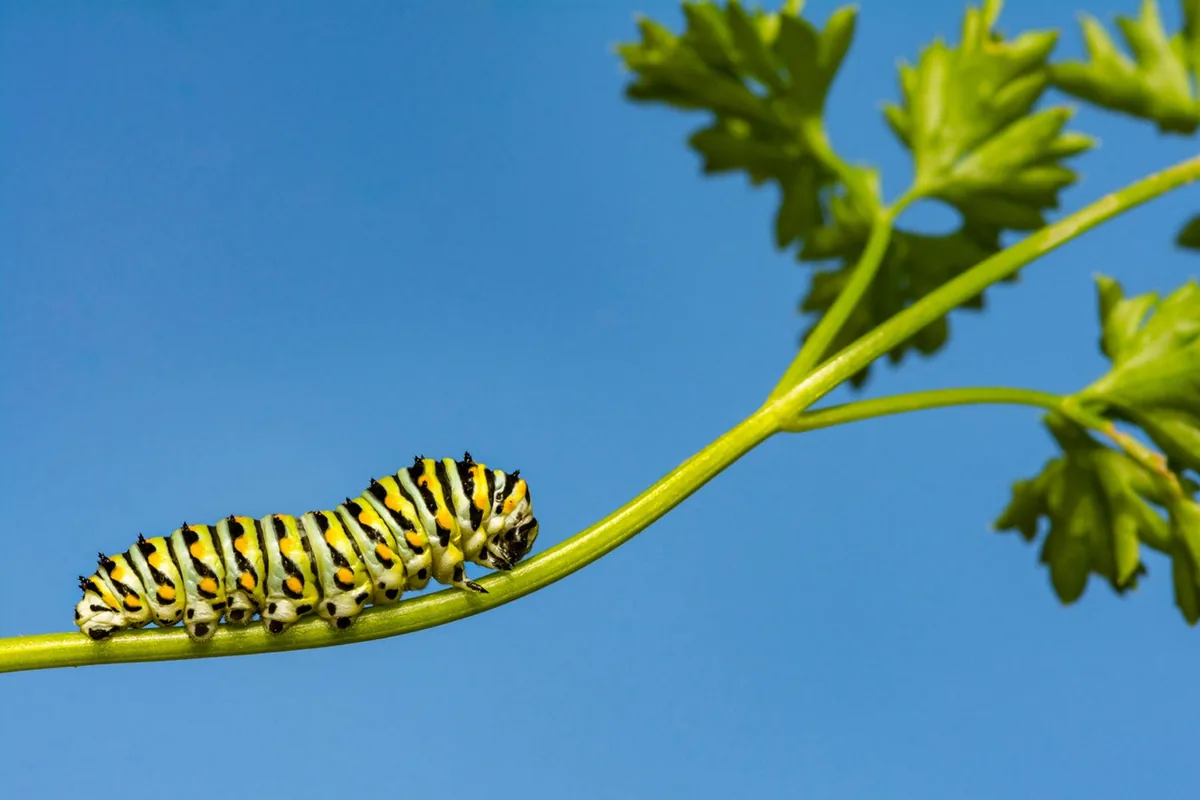
Field Identification
If leaves look shredded overnight or fruit has fresh chew holes, parsley worms may be feeding right now. These larvae can eat fast and strip a healthy plant in a short window. Young stages are easy to miss, then damage suddenly explodes as they grow. Catch them early to avoid severe defoliation and contaminated harvests.
Check leaf undersides, growing tips, and stem junctions for eggs, frass pellets, and feeding scars. Larvae vary in color, but most have a soft segmented body and blend into foliage. Look at dusk or early morning when many species feed more actively. Fresh chewing plus live larvae or droppings on lower leaves confirms an active caterpillar outbreak.
Not sure what you have? Use the symptom diagnosis tool →
How to Deal With It
Organic Control Methods
Parasitic wasps attack black swallowtail and related caterpillars; Cotesia cocoons on a still-living caterpillar mean help arrived. Birds and assassin bugs pick off larvae on outer umbels. If you want butterflies later, leave lightly parasitized cats alone. Broad sprays during summer kill parasitoids faster than they kill large larvae.
Inspect parsley, dill, and fennel for round eggs on leaf tips from midsummer onward -- crush eggs or move larvae to a sacrificial hedge. Decide if parsley is food or butterfly habitat on this bed; mixed goals confuse spraying. Flag rows near last year's outbreak; females often return to the same genetics.
Plant extra dill or fennel as a trap crop so egg layers find it before kitchen parsley. Adequate spacing helps leaves dry after dew; tight, humid pockets favor mold more than they repel moths. Intercropping alone does not hide parsley from flying adults.
Hand-pick caterpillars into soapy water when numbers are low -- fast on a patio pot, slow on a farm acre. Floating row covers block adult swallowtails until you remove covers for harvest or pollination.
Bacillus thuringiensis kurstaki kills feeding larvae that eat sprayed tissue -- spot-spray individuals you cannot relocate. Neem reduces feeding on small larvae; coverage must hit where they chew. Spray at dusk to spare syrphid eggs on nearby flowers. If the goal is habitat, skip sprays and use picking.
Let Nature Handle It
Natural Enemies
- Parasitic Wasps
- Birds
- Predatory Insects