About
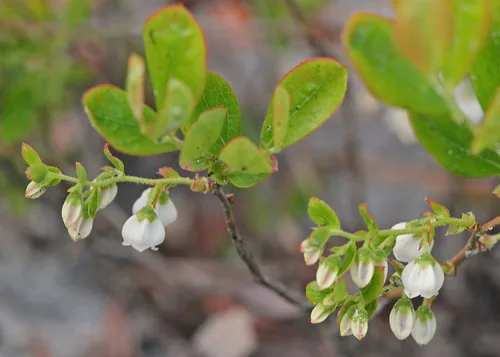
Dwarf huckleberry (Gaylussacia dumosa) is a low, rhizomatous ericaceous shrub of pine barrens, sandy flats, and open oak woodlands in eastern North America, with small, leathery leaves and dark blue-black berries that read like miniature blueberries with more attitude. It spreads into broad mats where fire or mowing keeps canopy open, feeding wildlife and patient foragers who do not mind small fruit. For permaculture it is a ground-layer fruit for acidic, lean soils where blueberries sulk and irrigation bills should die of shame. Full sun to partial shade; best fruiting in high-light openings. Requires acidic, well-drained, organic soils; iron chlorosis on alkaline sites is predictable. Drought tolerance is moderate once established but extreme dry spells reduce berry size. Mulch with pine needles or oak leaf mold to maintain pH honesty. Rhizome division in early spring moves expanding mats into new prepared beds. Seeds need acid media and long germination timelines; use for genetics experiments, not instant hedges. Pick when berries are dull matte to glossy black and release easily; flavor peaks in warm, dry weather. Use in mixed jams or baked goods where small fruit size is irrelevant. Burn or mow rotations on appropriate sites can renew stems—check local regulations and safety.
Permaculture Functions
- Edible: Gaylussacia dumosa berries are small, tart-sweet blue-black drupes -- mix into jam with sweeter fruit; yields are measured in patience, not buckets.
- Wildlife Attractor: Native bees work urn flowers -- berries feed songbirds across pine-barrens mats.
- Border Plant: Fine-textured knee-high shrubs edge acid paths -- stays low enough to define space without casting heavy shade on adjacent plantings.
- Ground Cover: Rhizomes spread broad mats on sandy, low-pH soils -- where conventional turf fails.
Companion Planting
Also mentioned as companions:
- Lowbush Blueberry
- Pitch Pine
Not yet profiled in PermiePortal
- Do not plant on limed agricultural soils without sustained acidification—ericaceous roots will yellow and sulk