About
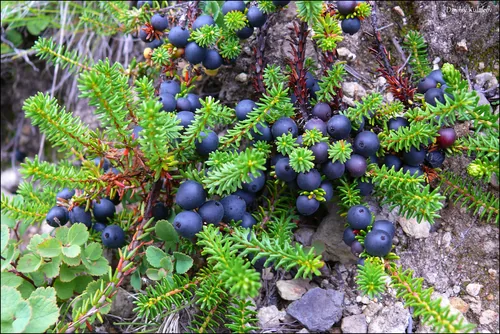
Crowberry (Empetrum nigrum) is a low, needle-leaved evergreen subshrub of cold bogs, heaths, and windswept barrens across northern regions and high elevations, forming mats studded with small glossy black berries. Height is usually under 1 foot (0.3 m) with creeping stems that root at nodes. The fruit is mildly sweet-tart and historically important where other fruits are scarce; ecologically it is ground-hugging armor against wind and thin soil. Full sun in cool climates; partial shade acceptable where summer heat spikes. Prefers acidic, organic soils that stay moist but not sewage-soggy; tolerates droughty rock once established in its comfort band. Avoid lime-heavy beds that erase Ericaceae chemistry. Layer low stems onto moist peat-sand; hold with stones until roots anchor. Sow seed after cold stratification; germination is slow and irregular, matching the plant’s personality. Softwood cuttings under mist can work for named selections if you have them. Berries ripen late in the short season; taste improves after frost in many sites. Pick by hand along the mat; expect modest yields that reward patience, not capitalism. Leave some fruit for ground-foraging birds that evolved with these systems.
Permaculture Functions
- Edible: Empetrum nigrum glossy black berries are mild sweet-tart -- pick late in the short season; flavor often improves after frost in cold sites.
- Wildlife Attractor: Ground-foraging birds and small mammals take fruit when other sugar is under snow -- leave clusters on the mat for guild partners.
- Ground Cover: Needle-leaved evergreen stems creep and root, tiling acidic bogs and exposed barrens -- where height stays under a foot.
- Erosion Control: Dense mats hold thin organic layers over rock -- stabilizes windswept slopes and coastal heaths where no other groundcover establishes.
Companion Planting
- Hot humid summers — often declines outside its native chill band no matter how much you cheer
- High pH soils — chlorosis and slow death; fix the bed or pick another plant