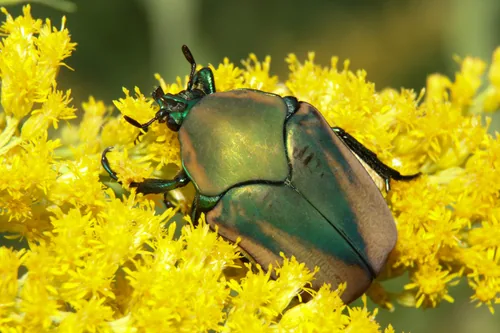
Field Identification
If new growth is curling, yellowing, sticky, or chewed, fig beetle may already be on the plant. This pest often builds quietly, then damage appears all at once. Feeding stress weakens growth, reduces yield, and opens the door to secondary disease. Early cleanup is much easier than fighting a full population surge later.
Inspect the newest growth first: leaf undersides, flower buds, stem joints, and tender tips where pests gather. Look for body shape, color, eggs, cast skins, honeydew, webbing, or fresh puncture marks. A hand lens and a white paper tap test help reveal small life stages. Matching visible pests with fresh plant damage confirms active infestation.
Not sure what you have? Use the symptom diagnosis tool →
How to Deal With It
Organic Control Methods
Adult Cotinis mutabilis fig beetles are big, slow targets for robber flies, birds, and toads when they blunder into open spaces. White grubs live in compost and soil; skunks and moles dig lawns hunting them -- accept some lawn archaeology as the price of free predation. Spiders snag beetles in flight near fruit. These helpers do not stop a full flight if fermenting fruit perfumes the whole block.
Sanitation breaks the party -- no forgotten fruit, no fermentation perfume calling every scarab in the zip code. Pick daily during peak ripeness; remove windfalls before noon heat. Keep compost piles and grass clippings away from fruiting trees; grubs often live under those piles and adults emerge next to your best figs. Flag trees that dropped last year; larvae may complete in soil nearby.
Harvest figs as they soften and split; overripe fruit draws adults from kilometers away. Remove split fruit and bird-pecked berries the same hour. In diversified yards, isolate mulberry and other soft fruit so they do not synchronize beetle parties. After harvest, rake mulch under trees so pupae have fewer moist pockets.
Floating row covers over dwarf figs or small berry patches exclude adults until you remove covers for harvest -- bury edges. Hand-collect adults in evening when they feed on ripe fruit; knock them into soapy water. For a few trees, hang sticky traps high in canopy only as monitoring; they catch some adults but also non-targets if overused.
Kaolin clay on fruit clusters before ripening reduces landing; rebuild after rain. Neem or pyrethrin work as spot treatments on heavy clusters -- avoid blanketing entire flowering hedges. Pyrethrin kills pollinators and minute pirate bugs; use only at dusk on calm evenings. Nothing beats picking fruit on time; sprays are backup for backyard emergencies, not a replacement for buckets.
Let Nature Handle It
Natural Enemies
- Birds
- Toads
- Robber Flies
Threat Map