About
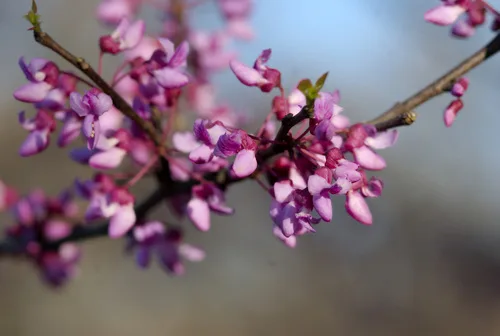
Eastern redbud (Cercis canadensis) is a small native deciduous tree of eastern North American wood margins and riparian edges, famous for magenta-pink flowers studding bare branches in early spring before heart-shaped leaves expand. Flowers are edible and pleasantly sweet-tart in salads; young pods pickle like tiny beans in some traditions. As a legume-family tree it can participate in soil-biology partnerships that matter in successional plantings—pair it with canopy species that respect its light needs. Full sun to partial shade; blooms heaviest with good light while tolerating woodland edge conditions. Moist, well-drained soils are ideal; tolerates short drought once established but not swamp life. Protect from dessicating winds on hot sites; mulch reduces root zone whiplash. Scarified seed after cold stratification improves germination reliability. Root cuttings and suckers can expand clones where parents already thrive. Grafted cultivars exist for color and form—match rootstock to regional disease pressures. Pick flowers at peak open for salads and fritters; harvest modestly to leave pollinator rewards. Young pods for pickles before strings toughen—taste-test a pod before you commit buckets. Seeds mature late; clean and store dry if you breed or share.
Permaculture Functions
- Edible: Cercis canadensis flowers are sweet-tart in salads and fritters; young pods pickle like tiny beans before strings toughen -- harvest modestly and ID carefully.
- Pollinator: Magenta blooms on bare wood feed early bees when canopy trees are still dormant -- critical nectar bridge in eastern woodlands.
- Wildlife Attractor: Later pods and small seeds feed finches and small mammals -- along forest margins.
- Nitrogen Fixer: Fabaceae rhizobia on roots add biologically available nitrogen to mulch layers -- not a row-crop substitute alone, but useful in diverse edges.
- Border Plant: Small stature fits courtyards, understory slots, and fence lines -- thrives beneath taller hardwoods where few flowering trees survive.
Companion Planting
- Walnut
Threats & Pressure