About
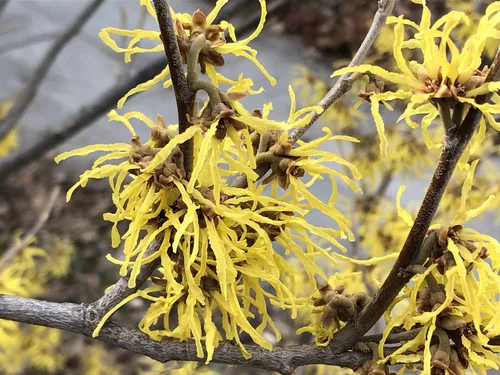
American witch hazel (Hamamelis virginiana) is a deciduous understory to woodland-edge shrub or compact multi-stemmed small tree, native to temperate eastern North America and widely planted where winters are cold enough for dormancy but summers are not blistering desert heat. Twigs are spreading and somewhat zigzag; leaves are broad, uneven at the base, and turn clear yellow in autumn. The unforgettable feature is late-season bloom: fragrant, narrow yellow petals streaming from buds in late fall or early winter (timing varies with climate), long after most woody plants have quit for the year. Part shade to full sun along woodland margins. Best in moist, acidic, organic-rich soil with steady drainage—think forest duff, not baking sand. Established plants tolerate dry shade more than tiny seedlings do; avoid drought on windy ridge tops until roots are deep. Mulch to mimic leaf litter and reduce root-zone heat spikes. Sow fresh seed after harvest; germination is often delayed by dormancy, so fall sowing outdoors is the patient person's path. Softwood cuttings in early summer under mist can work for named lines; layering low branches is slow but low-tech. Transplant young container stock in cool wet weather; minimal root disturbance helps. Floral display is ornamental; commercial “witch hazel” distillate for skin uses typically comes from bark and twig of this or closely related species—verify identity before home medicine experiments. Harvest for traditional bark/twig preparations only from abundant, well-identified plants and local rules permitting; most home growers treat it as a landscape and wildlife plant first.
Permaculture Functions
- Medicinal: Bark and twigs supply tannins and the traditional material for commercial witch hazel extract -- not the same chemistry as random "astringent" houseplants; correct species ID matters before stripping bark from wild stands.
- Wildlife Attractor: Late flowers feed flies, bees, and other chilly-day pollinators when little else offers nectar -- more ecological backup than crop monoculture, but real calories for insects on the margin of winter.
- Ornamental: Spidery yellow ribbons on bare wood are a landscape exclamation mark in dreary weeks -- fall color on foliage is a separate seasonal win; together they justify space in food forests that still pretend to have curb appeal.
- Pollinator: Odd-season bloom gives specialists a bridge when warm snaps wake insects too early -- not a honey bonanza, but a temporal niche few other shrubs fill at the same height.
Companion Planting
- False warm spells can open flowers before hard freeze—pollinators risk wasted trips; site in stable cold-air drainage if frost pockets are a known drama zone.
- Commercial extract comes from bark/twig, not random leaf tea—process and ID carefully if experimenting beyond ornament.
- Woodland herbs
Threats & Pressure