About
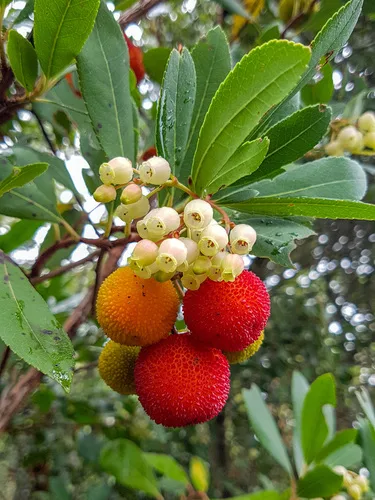
Strawberry tree (Arbutus unedo) is an evergreen small tree known for its year-round structure and its distinctive “strawberry-like” fruits. It is native to the Mediterranean region and parts of western Eurasia. Trees typically reach about 3–8 m (10–26 ft) tall, with leathery dark leaves, urn-shaped flowers in fall/winter, and fruit that matures as flowers appear—so a single plant can show both blooms and ripening fruits at once. In permaculture, strawberry tree matters because it provides an enduring, wildlife-friendly woody layer that delivers late-season fruit and supports a resilient garden microclimate. Full sun to partial shade; brighter sites generally improve flowering. Moderate watering during establishment; once rooted it tolerates dry spells. Prefers acidic, well-drained soil and dislikes wet, heavy beds. Protect young trees from prolonged frost or cold exposure. Seeds: collect ripe fruit, extract seeds, then cold-stratify; germination can take weeks to months. Cuttings: semi-hardwood cuttings can root under humidity, often in a couple of months. Layering: keep a low branch in contact with moist soil until it forms roots. Harvest fruits when they’re fully ripe (usually late fall into winter depending on climate). Eat fresh when fully ripe or use for preserves and preserves-style processing. Keep some fruit for wildlife; the plant is a shared ecosystem, not a vending machine.
Permaculture Functions
- Edible: Arbutus unedo rough orange-red berries ripen through autumn into sweet-mealy pulp best as jam -- harvest before fermentation starts if bears share your ridge.
- Wildlife Attractor: Bell honeys nectar feeds bees during Mediterranean wet season -- while berries fuel thrushes after leaf drop.
- Ornamental: Glossy evergreen blades, shreddy cinnamon bark, and simultaneous flowers plus fruit read mythic -- along courtyard walls above acid mulch.
Companion Planting