About
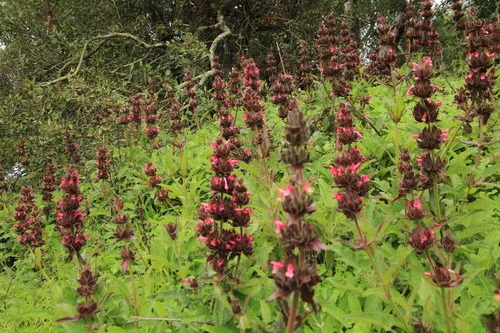
Hummingbird sage (Salvia spathacea) is a perennial herb native to western North America, grown for its showy, tubular flower spikes and strong aromatic foliage. Plants typically form a compact clump with leaves low to the ground and flower stalks that rise above, commonly about 20–60 cm (8–24 in) tall depending on conditions. In permaculture, it earns its keep because its blooms support pollinators through seasonal transitions while its aromatic leaves make it a practical medicinal herb in a living garden bed. Full sun to partial shade; more sun usually means stronger flowering. Water moderately during establishment; once established, it tolerates dry spells. Prefers well-drained soil; wet feet increase decline. Protect from prolonged cold snaps if your winters are harsh. Seeds: start indoors or direct-sow; germination can take a few weeks with consistent moisture. Division: split mature clumps in spring or early fall for reliable clones. Cuttings: take softwood cuttings in warm weather and root under humidity. Harvest leaves as needed once the plant is established; pick in the morning for best aroma. Harvest flower spikes when in full bloom for teas, infusions, or garnishes. Trim lightly after the main bloom to encourage tidy regrowth.
Permaculture Functions
- Pollinator: Salvia spathacea forms horizontal spikes of magenta tubular flowers hugging the ground -- hummingbirds cruise inches above mulch, so site patches where you can watch without trampling rhizomes.
- Medicinal: Resinous apple-scented leaves yield tea with a sage-meets-fruit profile for calming evening brews -- dry leaves slowly with airflow because woolly mint-family herbs mold if piled deep while damp.
- Wildlife Attractor: Fragrant foliage and long-bloom window pull hummingbirds and native bees into dry shade gardens -- pair with evergreen oaks so leaf litter matches the plant’s Californian chaparral niche.
Companion Planting