About
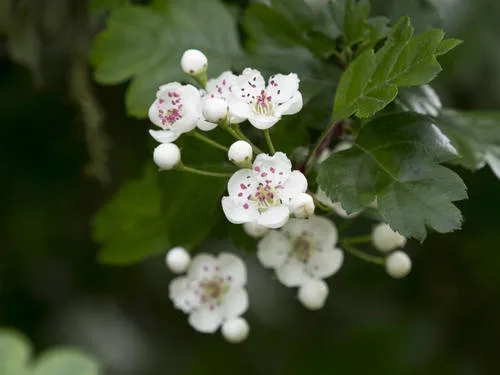
Hawthorn (Crataegus monogyna) is a thorny deciduous shrub or small tree valued for wildlife habitat and long-term landscape structure. It grows on temperate sites and forms dense branching with strong thorns, fragrant spring flowers, and small edible fruits that ripen later. In permaculture, it matters because you get a living security fence: birds nest and feed in it, pollinators work the blossoms, and the pruned wood becomes usable biomass while the plant tolerates neglect better than many “gentle” ornamentals. Full sun is best for flowers and fruit; partial shade reduces performance. Water moderately during establishment; once established it can handle some dry spells. Prefers well-drained soil; waterlogged ground stresses roots. Handles seasonal temperature swings well when mature. Seeds: cold-stratify for several months; germination can be slow and uneven. Cuttings: take semi-hardwood cuttings in warm seasons; root under humidity. Grafting or suckers: use rooted suckers or graft for quicker structure and reliable fruiting. Harvest berries when fully colored and soft; pick in rounds over a few days. Leaves and flowers can be gathered in early bloom for tea-style infusions. Use fruit for jelly, syrups, or dried snacks; store dried material cool and sealed.
Permaculture Functions
- Medicinal: Crataegus monogyna flowers and ripe haws enter European phytotherapy for cardiac tone and circulation support -- harvest corollas at early full bloom and berries after the first frost touch for tea or tincture material, and coordinate with a clinician if you already take heart meds.
- Wildlife Attractor: Dense, thorny scaffolding shelters nesting songbirds while May blossoms feed pollinators and red haws feed thrushes into winter -- leave upper branches unpruned if wildlife pantry matters more than formal symmetry.
- Border Plant: Multi-stemmed habit and gray thorns make a stock-proof hedge along paddocks or paths -- shear sides for width control but renew interior wood so flowering spurs stay productive and fire blight has fewer damp pockets.
Companion Planting
Threats & Pressure