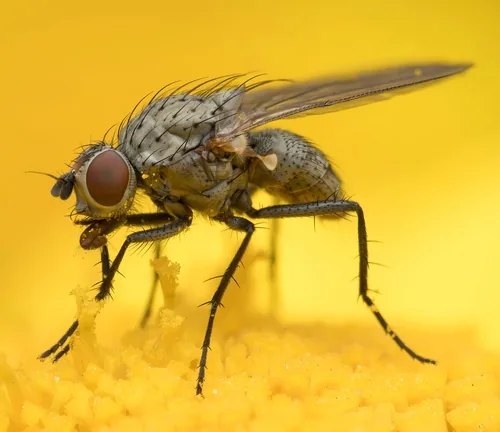
Field Identification
If leaves show trails, fruit turns soft, or roots collapse from inside, onion maggot may already be feeding. The larval stage does most of the damage, often hidden where you cannot see it at first glance. By the time yellowing or rot appears, feeding may be well underway. Move quickly when symptoms begin to prevent another wave of eggs and larvae.
Watch for tiny eggs near plant tissue, pale legless larvae inside mines or fruit, and sudden soft spots or tunnels. Adults are usually small flies that hover or dart when disturbed. Check around wounds, blossoms, and moist plant debris where egg-laying is common. Cut open suspect tissue: live maggots or fresh tunnels are the clearest field confirmation.
Not sure what you have? Use the symptom diagnosis tool →
How to Deal With It
Organic Control Methods
Ground beetles and rove beetles eat fly eggs at the soil surface when adults lay at crowns. Steinernema feltiae nematodes infect maggots in moist soil when soil temperature fits the product -- apply right after thinning or when flies peak. Nematodes fail in cold, dry, or sandy soil; irrigation timing matters more than brand loyalty.
Yellow sticky stakes at onion height catch adults for trend lines -- rising catches mean cover or drench windows. Delay planting until soils warm slightly and excess moisture dries; soggy fields smell like fly perfume. Scout for wilting flag leaves; maggot injury mimics drought. Map fields with history and walk those first each spring.
Avoid fresh manure before Allium beds; use finished compost. Rotate onion and garlic blocks on at least a three-year cycle. Disk in overwintered culls before adults emerge from pupae. Wait for soil warm-up so seedlings race past vulnerable tiny stages faster. Destroy bolting onions that attract flies from across the road.
Floating row covers on seedbeds and transplants block egg-laying females when edges bury in soil with no gaps -- flies walk under loose flaps. Collars around stems add protection when combined with covers. Fine mesh over low tunnels works for high-value seed crops.
Spinosad or neem soil drenches during egg-lay peaks target larvae near crowns -- read labels for crop and timing. Apply nematodes immediately after drench water so carriers stay moist. Repeat after heavy rain washes residues. Foliar sprays hit adults briefly; soil biology does heavy lifting for maggots.
Let Nature Handle It
Natural Enemies
- Ground Beetles
- Rove Beetles
- Entomopathogenic Nematodes
Threat Map